Predicting cardiac electrical response to sodium-channel blockade and Brugada syndrome using polygenic risk scores
European Heart Journal


Abstract
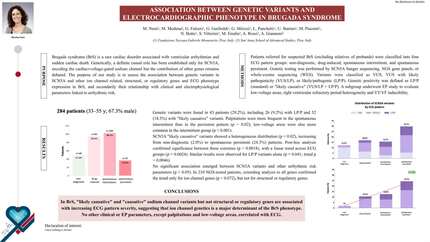
Sodium-channel blockers (SCBs) are associated with arrhythmia, but variability of cardiac electrical response remains unexplained. We sought to identify predictors of ajmaline-induced PR and QRS changes and Type I Brugada syndrome (BrS) electrocardiogram (ECG).
In 1368 patients that underwent ajmaline infusion for suspected BrS, we performed measurements of 26 721 ECGs, dose–response mixed modelling and genotyping. We calculated polygenic risk scores (PRS) for PR interval (PRSPR), QRS duration (PRSQRS), and Brugada syndrome (PRSBrS) derived from published genome-wide association studies and used regression analysis to identify predictors of ajmaline dose related PR change (slope) and QRS slope. We derived and validated using bootstrapping a predictive model for ajmaline-induced Type I BrS ECG. Higher PRSPR, baseline PR, and female sex are associated with more pronounced PR slope, while PRSQRS and age are positively associated with QRS slope (
We show for the first time that genetic factors underlie the variability of cardiac electrical response to SCB. PRSBrS, family history, and a baseline ECG can predict the development of a diagnostic drug-induced Type I BrS ECG with clinically relevant accuracy. These findings could lead to the use of PRS in the diagnosis of BrS and, if confirmed in population studies, to identify patients at risk for toxicity when given SCB.
Contributors

Sulayman el Mathari
Author
Jan A Kors
Author
Pieter G Postema
Author
Najim Lahrouchi
Author
Leander Beekman
Author
Milena Radivojkov-Blagojevic
Author
Ahmad S Amin
Author
Thomas Meitinger
Author


Hanno L Tan
Author
You may be interested in