Sudden cardiac death in adult congenital heart disease: can the unpredictable be foreseen?
EP Europace Journal


Abstract
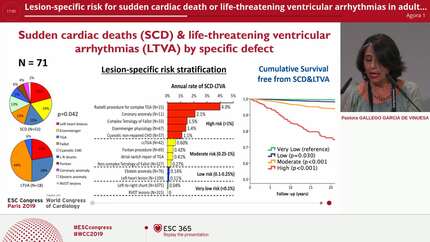
Sudden cardiac death (SCD) is a major cause of mortality in adults with congenital heart disease (CHD). Several risk factors for SCD including conduction disturbances and ventricular dysfunction have been described previously. However, electrocardiogram (ECG) and echocardiographic parameters may change over time, and the predictive value of such temporal changes, rather than their point estimates, for SCD remains unknown.
This was a retrospective case–control study in adults with CHD and proven or presumed SCD and matched controls. Data were obtained from three databases including 25 000 adults with CHD. Sequential measurements were performed on electrocardiograms and echocardiograms. Ventricular function was assessed by echocardiography and graded on a four-point ordinal scale: 1, normal [ejection fraction (EF) ≥50%]; 2, mildly impaired (EF 40–49%); 3, moderately impaired (EF 30–39%); and 4, severely impaired (EF < 30%). Overall, 131 SCDs (mean age 36 ± 14 years, 67% male) and 260 controls (mean age 37 ± 13 years, 63% male) were included. At baseline, median QRS duration was 108 ms (range 58–168 ms) in SCDs and 97 ms (range 50–168 ms) in controls and increased over time at a rate of 1.6 ± 0.5 vs. 0.5 ± 0.2 ms/year in SCDs and controls, respectively (
In adults with CHD, QRS duration and ventricular dysfunction progress over time. Progression of QRS duration and the rate of impairment of ventricular function served to identify those at increased risk of SCD.
Contributors

Zeliha Koyak
Author
Joris R. de Groot
Author
Berto J. Bouma
Author
Aeilko H. Zwinderman
Author
Candice K. Silversides
Author
Erwin N. Oechslin
Author
Werner Budts
Author
Isabelle C. Van Gelder
Author

Barbara J.M. Mulder
Author
Faculty of Medecine - University of Amsterdam Amsterdam , Netherlands (The)
Louise Harris
Author
You may be interested in