Epsilon wave on an electronic loop in a case of arrhythmogenic right ventricular dysplasia with myocarditis: an updated definition of the Epsilon wave
EP Europace Journal


Abstract
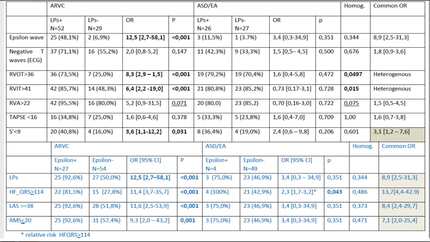
A young man presented with a history of myocarditis with palpitations and dizziness. He had implantation of a loop recorder that showed repetitive short episodes of VT. In addition, there were fragmented potentials immediately following the large and sharp electrograms (EGMs) before as well as after episodes of VT suggesting an Epsilon wave. This signal can be observed in multiple cardiac conditions including coronary artery disease. It was originally recorded on the epicardium as well as on the endocardium. However, in ARVD it can be defined as an electric signal observed after the end of the QRS complex in the right as opposed to the left precordial leads (difference ≥ 25 ms). It can also be an aid to the diagnosis of patients with ARVD who have other signs or symptoms suggesting ARVD including episodes of myocarditis. This potential consists of a slurring at the end of the QRS complex or an independent potential after the return to the isoelectric line. It can be better observed by increasing amplification of the ECG tracing as well as double speed using the Fontaine lead system. Epsilon wave too small to be recorded on the standard ECG can be extracted by Signal Averaging ECG SAECG).
Contributors

Guy Hugues Fontaine
Author
Guillaume Duthoit
Author
Guoliang Li
Author
L. Andreoletti
Author
Estelle Gandjbakhch
Author
Robert Frank
Author
You may be interested in