Implantation of cardiac resynchronization therapy devices using three leads by cephalic vein dissection approach

EP Europace Journal

17 March 2017
Organised by: Logo
ESC Journals

Abstract

AbstractAims

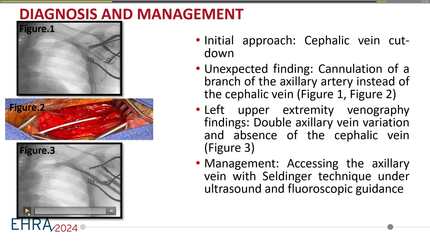
Percutaneous subclavian, axillary, and cephalic vein access are all used in conjunction for atrial and ventricular lead implantation, though no standard approach for cardiac resynchronization therapy (CRT) device implantation has been established. We describe an effective and a safe technique for implanting three leads via cephalic vein for CRT pacemaker and/or defibrillator implantations.

Methods and results

A total of 171 consecutive patients undergoing de novo implantation of CRT pacemaker or defibrillator were included. Cephalic vein access was achieved by dissection and direct visualization. If the cephalic vein was inadequate, alternate means of access was determined after outset of the procedure. Procedural success rates and complications were recorded. Of the 171 de novo CRT implant attempts, 169 (98.8%) patients had successful implantation of all 3 leads on the first attempt. Of the 171 procedural attempts, 150 (87.7%) patients had all 3 leads placed via cephalic vein. Overall, complications occurred in 6 of 171 patients (3.5%) including initial and repeat procedures. These complications included seven lead dislodgements, two cases of diaphragmatic stimulation requiring lead revision, and one coronary sinus dissection without pericardial effusion. There were no cases of pneumothorax, pocket haematoma requiring evacuation, or infection.

Conclusion

The triple lead via cephalic vein technique is safe and effective when used as a first approach for CRT device implantation.

Contributors

Vidal Essebag
Vidal Essebag

Author

McGill University Health Centre Montreal , Canada