Economic impact of remote monitoring after implantable defibrillators implantation in heart failure patients: an analysis from the EFFECT study
EP Europace Journal


Abstract
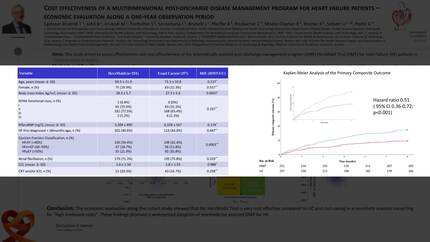
Heart failure (HF) patients with implantable cardioverter-defibrillators (ICD) require admissions for disease management and out-patient visits for disease management and assessment of device performance. These admissions place a significant burden on the National Health Service. Remote monitoring (RM) is an effective alternative to frequent hospital visits. The EFFECT study was a multicentre observational investigation aiming to evaluate the clinical effectiveness of RM compared with in-office visits standard management (SM). The present analysis is an economic evaluation of the results of the EFFECT trial.
The present analysis considered the direct consumption of healthcare resources over 12-month follow-up. Standard tariffs were applied to hospitalizations, in-office visits and remote device interrogations. Economic comparisons were also carried out by means of propensity score (PS) analysis to take into account the lack of randomization in the study design. The analysis involved 858 patients with ICD or CRT-D. Of these, 401 (47%) were followed up via an SM approach, while 457 (53%) were assigned to RM. The rate of hospitalizations was 0.27/year in the SM group and 0.16/year in the RM group (risk reduction =0.59;
There is a reduction in direct healthcare costs of RM for HF patients with ICDs, particularly CRT-D, compared with standard monitoring.
Contributors

Alessandro Capucci
Author
Antonio De Simone
Author
Mario Luzi
Author
Valeria Calvi
Author
Giuseppe Stabile
Author
Antonio D’Onofrio
Author
Simone Maffei
Author
Loira Leoni
Author
Giovanni Morani
Author
Raffaele Sangiuolo
Author
Claudia Amellone
Author
Catia Checchinato
Author
Ernesto Ammendola
Author
Gianfranco Buja
Author
You may be interested in