Characteristics and early clinical outcomes of patients undergoing totally subcutaneous vs. transvenous single chamber implantable cardioverter defibrillator placement
EP Europace Journal


Abstract
In 2012, the first totally Subcutaneous Implantable Cardioverter-Defibrillator (S-ICD) was approved by the Food and Drug Administration (FDA) in the United States. A possible benefit of this device is that it does not involve placing leads ‘in’ or ‘on’ the heart, potentially reducing complications.
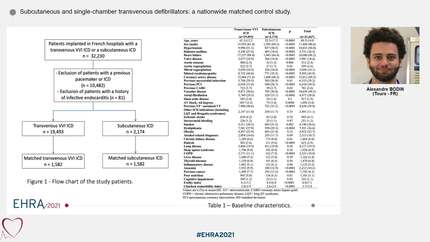
Ninety-one S-ICD and 182 single chamber TV-ICD implants were performed between 10/22/2012 and 9/22/2015. During this period of time, 91 patients with S-ICD were matched to TV-ICD patients using single centre NCDR ICD Registry Data based on dialysis status, gender, and age. Intra- and post-operative complications and deaths were examined within the first 180 days following implantation. Patients with S-ICDs had higher creatinine (2.3 ± 2.5 vs. 1.1 ± 0.7,
In this retrospective matched single centre cohort study, there was no significant difference in implantation complications or death in patients receiving single chamber TV-ICDs compared to S-ICDs within 6 months following implantation. This occurred despite more severe preexisting illness in the S-ICD group. Further investigation is needed to determine outcomes after longer-term follow-up.
Contributors

Ali A Mithani
Author
Heaton Kath
Author
Krystal Hunter
Author
John Andriulli
Author
Matthew Ortman
Author
Julie Field
Author
Andrea M Russo
Author
You may be interested in