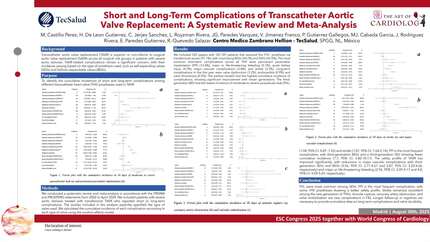
How to reduce uncommon but severe transcatheter aortic valve implantation complications: stroke, thrombosis, endocarditis, cognitive decline?
European Heart Journal Supplements


Abstract
Transcatheter aortic valve implantation has become a valid alternative to surgical aortic valve replacement for patients with symptomatic severe aortic stenosis, regardless of baseline surgical risk. The incidence of periprocedural complications has steadily declined over the years, thanks to technical advancement of transcatheter heart valves, delivery systems, and increased operators’ experience. Beyond the most common periprocedural complications, there are a few uncommon but potentially severe complications that more often occur during follow-up, although they may also arise in the periprocedural phase. Stroke, infective endocarditis, valve thrombosis, and cognitive decline are among them. In this brief review, we describe the incidence, predictive factors, and potential preventive measures for those events.
Contributors


Mateusz Orzalkiewicz
Author
You may be interested in