C103. Viral Myocarditis Mimicking Acute Myocardial Infarction: A Case Report
European Heart Journal Supplements


Abstract
Acute myocarditis still challenging diagnosis in cardiology. Its entity is rarely recognized and its pathophysiology defectively understood. Viral infection remains the most commonly identified cause for myocarditis, but bacteria, fungi, protozoa, and helminths have also been implicated.
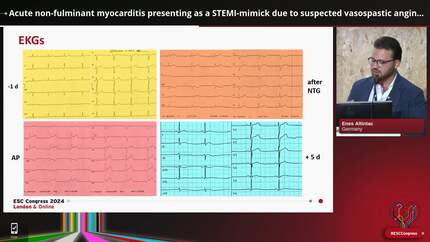
A 61 years old female was admitted to emergency department, complaining typical angina since 12 hours prior to admission. She also complains nausea, vomit, flu like syndrome, and low grade fever since 1 weeks prior to admission. She was a former smoker and had hypertension. ECG in 6 hours on admission ECG revealed sinus rhythm, ST-elevation anteroseptal, ischemic lateral-high lateral and there is no evolution compare to previous ECG which taken in other hospital. Laboratory findings showed increased of troponin enzyme. Coronary angiography was performed with result normal coroner. Echocardiography revealed normal all chambers, concentric LV remodelling, normal LV systolic function with ejection fraction 51% without regional wall motion abnormalities. On the next day, troponin levels decrease and the ECG remain abnormal without any changes. In order to get more data, CMR was planned, but she refused. Patients was discharged uneventful.
Myocarditis is challenging diagnosis due to the heterogenicity clinical presentation. It presents in many different ways, ranging from mild “flu-like” symptoms, mild symptoms of chest pain and palpitations associated with transient ECG changes. Chest pain in acute myocarditis may mimic typical angina and be associated with electrocardiographic changes, including ST-segment elevation and often misdiagnosed as ACS until coronary angiography demonstrates normal or non-obstructive coronary arteries.
Contributors

R A Seriulina
Author
E Martanto
Author
You may be interested in