C46. Gastrointestinal-related Symptoms Leading to Acute ST Elevation Myocardial Infarction in a Young Woman without Cardiovascular Risk Factor in Rural Area: A case report
European Heart Journal Supplements


Abstract
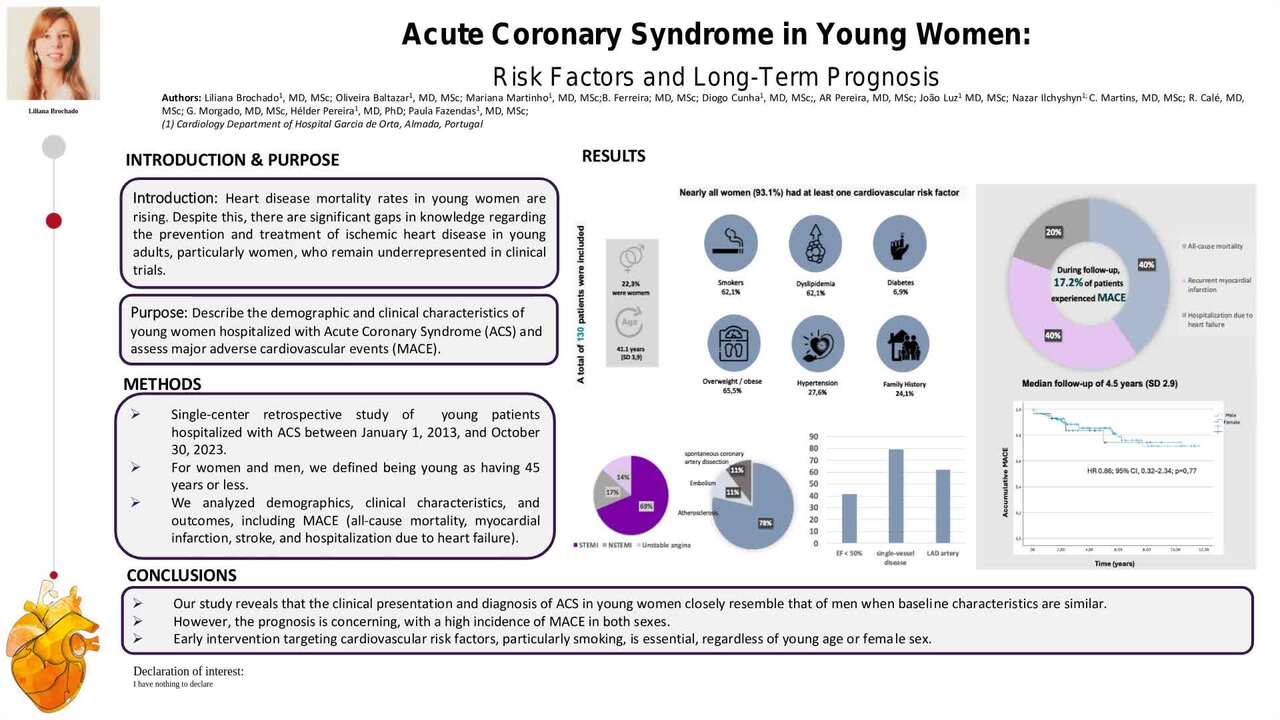
Acute Coronary Syndrome (ACS) has been regarded as man’s disease, for many years, women have been underdiagnosed and undertreated. Women commonly present with atypical right-sided chest pain, neck or shoulder pain, and gastrointestinal symptoms.
A 31-year-old woman presented to the ER with worsening epigastric pain accompanied with nausea, vomiting and diaphoresis since 30 minutes before admission. She had similar complaints before and only took dyspepsia medication repeatedly. She denied any history of smoking, hypertension, T2DM, dyslipidemia, and family history of ACS. Physical examination was within normal limits except for epigastric tenderness. The electrocardiogram showed ST-elevation in leads II, III, AVF, V7-V9, and ST depression in leads V2-V4. Laboratory results were within normal limits. She was diagnosed with acute inferoposterior STEMI and RV infarction. Loading dose of dual-antiplatelets was given, followed by fibrinolysis therapy using Streptokinase. After 60 minutes, the epigastric pain subsided and she had no other complaints, and successful fibrinolysis was achieved, she was transferred to the ICU for further treatment.
Although females in reproductive age have cardio-protective effects of endogenous estrogen, ACS is still possible. They can present with non-specific gastrointestinal symptoms, a 12-lead-ECG can confirm the diagnosis of STEMI in young women with non-specific symptoms. Possible etiologies including plaque rupture or erosions, microvascular dysfunction, and spontaneous coronary artery dissection (SCAD) can be determined by coronary angiography. Since catheterization laboratory services are unavailable in our province, this patient is planned to undergo coronary angiography after hospital discharge.
Contributors

You may be interested in