OR47. Index of Cardiac Electrophysiological Balance (iCEB) in Patients with COVID-19
European Heart Journal Supplements


Abstract
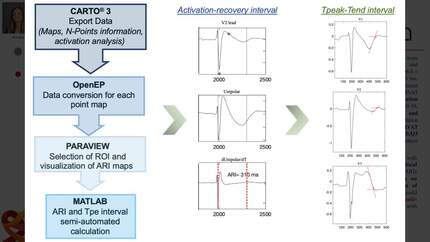
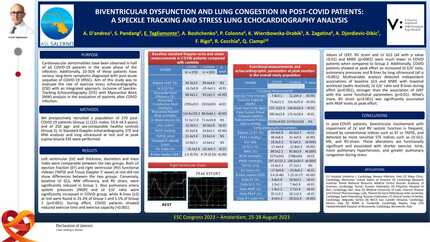
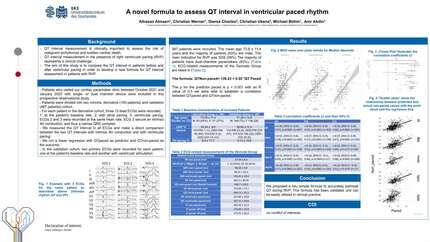
We aimed to examine whether there is abnormal value of index of cardiac electrophysiological balance (iCEB=QT/QRS) in patients with confirmed coronavirus disease 2019 (COVID-19), which can predict ventricular arrhythmias (VAs), including non-Torsades de Pointes-like ventricular tachycardia/ventricular fibrillation (non-TdPs-like VT/VF) in low iCEB and Torsades de Pointes (TdPs) in high iCEB. We also investigated low voltage ECG among COVID-19 group.
This is a cross-sectional, single center study with a total of 53 newly diagnosed COVID-19 patients (confirmed with polymerase chain reaction (PCR) test) and 63 age and sex-matched control subjects were included in the study. Electrocardiographic marker of iCEB were calculated manually from 12-lead ECG. Low voltage ECG defined as peak-to-peak QRS voltage less than 5 mm in all limb leads and less than 10 mm in all precordial leads. Patients with COVID-19 more often had low iCEB, defined as iCEB below 3.24 compared to control group (56.6% vs 11.1%), (OR = 10.435; 95%CI 4.015 – 27.123; p = 0.000). There were no significant association between COVID-19 and high iCEB, defined as iCEB above 5.24 (OR = 1.041; 95%CI 0.485 – 2.235; p = 0.917). There were no significant difference of the number of low voltage ECG between COVID-19 and control groups (15.1% vs 6.3%), (OR = 2.622; 95%CI 0.743 - 9.257, p = 0.123).
In this study showed that patients with COVID-19 are more likely to have low iCEB, suggesting that patients with COVID-19 may be proarrhytmic (towards non-TdPs-like VT/VF event), due to the alleged myocardial involvement in SARS-CoV-2 infection.
Contributors

Rido Mulawarman
Author
Muhammad Syahrul Ramadhan
Author
Monica Trifitriana
Author
Hisham Mulawarman
Author
Muhammad Ikhsan Nurmansyah
Author
Chandra Agung Maulana
Author
Alexander Edo Tondas
Author
You may be interested in