Long-term outcome of epicardial implantable cardioverter-defibrillator systems in children: results justify its preference in paediatric patients
EP Europace Journal


Abstract
The question of whether transvenous or epicardial implantable cardioverter defibrillator (ICD) system is more beneficial in children and adolescents is controversially discussed. We sought to analyse the long-term outcome after implantation of ICDs using epicardial pacing/sensing and pleural shock leads.
Retrospective analysis of 31 consecutive patients undergoing a total of 55 implantations of epicardial/pleural ICD systems below 20 years of age. Median age at implantation was 11.4 years (range 2.2–20) and median follow-up 57 months (range 0.4–127). The ICDs were implanted for primary (
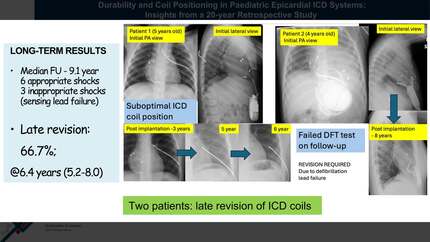
Paediatric epicardial/pleural ICD therapy is feasible, effective, and safe both in the short-term as well as in the long-term perspective at the price of relatively frequent surgical revisions. They do not generally result in an increased burden of inappropriate shocks. This ICD system meets the needs of the paediatric population and can be recommended as a first choice in this age group.
Contributors

You may be interested in