P93 The usefulness of dual cardiac autonomic nervous modulation assessment for prediction of mortality in patients with relatively preserved left ventricular ejection fraction
European Heart Journal


Abstract
Recent guidelines have stated that reduced left ventricular ejection fraction (LVEF) is the gold standard marker for identifying patients at risk for cardiac mortality. Although reduced LVEF identifies patients at an increased risk of cardiac arrest, sudden cardiac deaths (SCDs) occur considerably more often in patients with relatively preserved LVEF. Current guidelines on SCDs risk stratification do not adequately cover this general population pool. Heart rate variability (HRV) and heart rate turbulence (HRT) are non-invasive electrocardiography (ECG)-based techniques capable of providing relevant information on the cardiac autonomic nervous modulation. Although a large body of evidence about autonomic nervous modulation markers has been reported, the usefulness of HRV and HRT parameters for risk stratification in such patients with relatively preserved LVEF has not yet been elucidated.
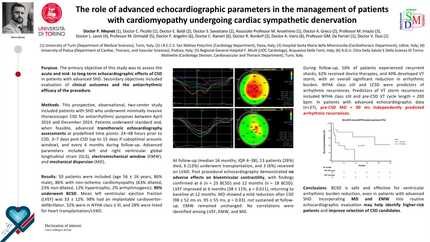
This study aimed to evaluate HRV and HRT parameters for predicting cardiac mortality in patients with structural heart disease (SHD), including ischemic heart disease, dilated cardiomyopathy and valvular heart disease, who have mid-range left ventricular dysfunction (LVD).
We prospectively enrolled 229 patients (187 men, age 63 ± 13 years) with SHD who have mid-range LVD (LVEF > 40%). HRV and HRT parameters based on 24-hour ambulatory ECG recordings (Fukuda Denshi Co., Ltd., Tokyo, Japan) were evaluated as follows; SDNN, triangular index, high and low frequency HRV, turbulence onset and slope. The primary endpoint was all-cause mortality. Univariate and multivariate Cox regression analysis were used to assess the association between these cardiac autonomic nervous modulation and mortality.
During a mean follow-up of 21 ± 11 months, all-cause mortality was seen in 11 (4.8%) patients. Univariate Cox regression analysis showed that reduced SDNN (<50ms), reduced triangular index (<20ms) and HRT category 2 were significantly associated with the primary endpoint (P < 0.05). When HRT category 2 combined with reduced SDNN, Multivariate Cox regression analysis revealed that this combination more strongly associates with the primary endpoint (hazard ratio =7.91, 95%CI, 1.82-34.2; P = 0.006).
Dual cardiac autonomic nervous modulation assessment which combined HRT and HRV could be a superior technique to predict mortality in patients with relatively preserved LVEF.

You may be interested in