PREVEntion and regReSsive Effect of weight-loss and risk factor modification on Atrial Fibrillation: the REVERSE-AF study
EP Europace Journal


Abstract
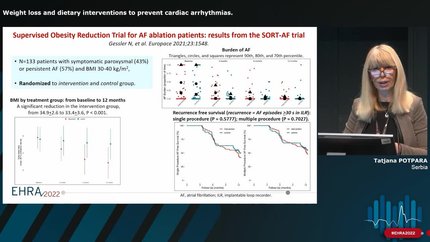
Atrial fibrillation (AF) is a progressive disease. Obesity is associated with progression of AF. This study evaluates the impact of weight and risk factor management (RFM) on progression of the AF.
As described in the Long-Term Effect of Goal-Directed Weight Management in an Atrial Fibrillation Cohort: A Long-Term Follow-Up (LEGACY) Study, of 1415 consecutive AF patients, 825 had body mass index ≥ 27 kg/m2 and were offered weight and RFM. After exclusion, 355 were included for analysis. Weight loss was categorized as: Group 1 (<3%), Group 2 (3–9%), and Group 3 (≥10%). Change in AF type was determined by clinical review and 7-day Holter yearly. Atrial fibrillation type was categorized as per the Heart Rhythm Society consensus. There were no differences in baseline characteristic or follow-up duration between groups (
Obesity is associated with progression of the AF disease. This study demonstrates the dynamic relationship between weight/risk factors and AF. Weight-loss management and RFM reverses the type and natural progression of AF.
Contributors

Melissa E Middeldorp
Author
Rajeev K Pathak
Author
Megan Meredith
Author
Abhinav B Mehta
Author
Adrian D Elliott
Author
Rajiv Mahajan
Author
Darragh Twomey
Author
Celine Gallagher
Author
Jeroen M L Hendriks
Author
Dominik Linz
Author
R Doug McEvoy
Author
Walter P Abhayaratna
Author
Jonathan M Kalman
Author
Dennis H Lau
Author

You may be interested in