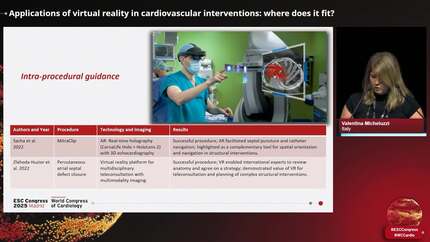
Development of a patient-oriented Hololens application to illustrate the function of medication after myocardial infarction
European Heart Journal - Digital Health


Abstract
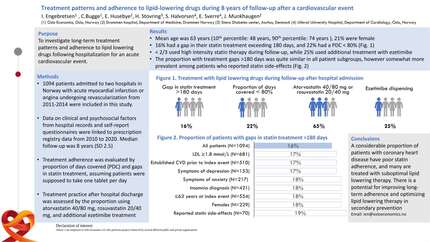
Statin treatment is one of the hallmarks of secondary prevention after myocardial infarction. Adherence to statins tends to be difficult and can be improved by patient education. Novel technologies such as mixed reality (MR) expand the possibilities to support this process. To assess if an MR medication-application supports patient education focused on function of statins after myocardial infarction.
A human-centred design-approach was used to develop an MR statin tool for Microsoft HoloLens™. Twenty-two myocardial infarction patients were enrolled; 12 tested the application, 10 patients were controls. Clinical, demographic, and qualitative data were obtained. All patients performed a test on statin knowledge. To test if patients with a higher tendency to become involved in virtual environments affected test outcome in the intervention group, validated Presence- and Immersive Tendency Questionnaires (PQ and ITQ) were used. Twenty-two myocardial infarction patients (ST-elevation myocardial infarction, 18/22, 82%) completed the study. Ten out of 12 (83%) patients in the intervention group improved their statin knowledge by using the MR application (median 8 points, IQR 8). Test improvement was mainly the result of increased understanding of statin mechanisms in the body and secondary preventive effects. A high tendency to get involved and focused in virtual environments was moderately positive correlated with better test improvement (
An MR statin education application can be applied effectively in myocardial infarction patients to explain statin function and importance.
Contributors

Alexander D Hilt
Author
Beerend P Hierck
Author
Joep Eijkenduijn
Author
Fons J Wesselius
Author
Armagan Albayrak
Author
Marijke Melles
Author
Martin J Schalij
Author
You may be interested in