Towards patient-specific prediction of conduction abnormalities induced by transcatheter aortic valve implantation: a combined mechanistic modelling and machine learning approach
European Heart Journal - Digital Health


Abstract
Post-procedure conduction abnormalities (CA) remain a common complication of transcatheter aortic valve implantation (TAVI), highlighting the need for personalized prediction models. We used machine learning (ML), integrating statistical and mechanistic modelling to provide a patient-specific estimation of the probability of developing CA after TAVI.
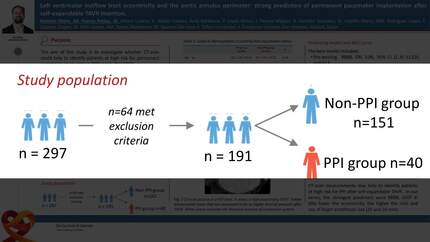
The cohort consisted of 151 patients with normal conduction and no pacemaker at baseline who underwent TAVI in nine European centres. Devices included CoreValve, Evolut R, Evolut PRO, and Lotus. Preoperative multi-slice computed tomography was performed. Virtual valve implantation with patient-specific computer modelling and simulation (CM&S) allowed calculation of valve-induced contact pressure on the anatomy. The primary composite outcome was new onset left or right bundle branch block or permanent pacemaker implantation (PPI) before discharge. A supervised ML approach was applied with eight models predicting CA based on anatomical, procedural and mechanistic data. CA occurred in 59% of patients (
ML, integrating statistical and mechanistic modelling, achieved an accurate prediction of CA after TAVI. This study demonstrates the potential of a synergetic approach for personalizing procedure planning, allowing selection of the optimal device and implantation strategy, avoiding new CA and/or PPI.
Contributors

Valeria Galli
Author
Filip Loncaric
Author
Giorgia Rocatello
Author
Patricio Astudillo
Author
Laura Sanchis
Author
Ander Regueiro
Author
Ole De Backer
Author
Martin Swaans
Author
Johan Bosmans
Author
Joana Maria Ribeiro
Author

Pablo Lamata
Author
King's College London London , United Kingdom of Great Britain & Northern Ireland
Marta Sitges
Author
Peter de Jaegere
Author
You may be interested in