Predictors of recurrence after durable pulmonary vein isolation for paroxysmal atrial fibrillation
EP Europace Journal


Abstract
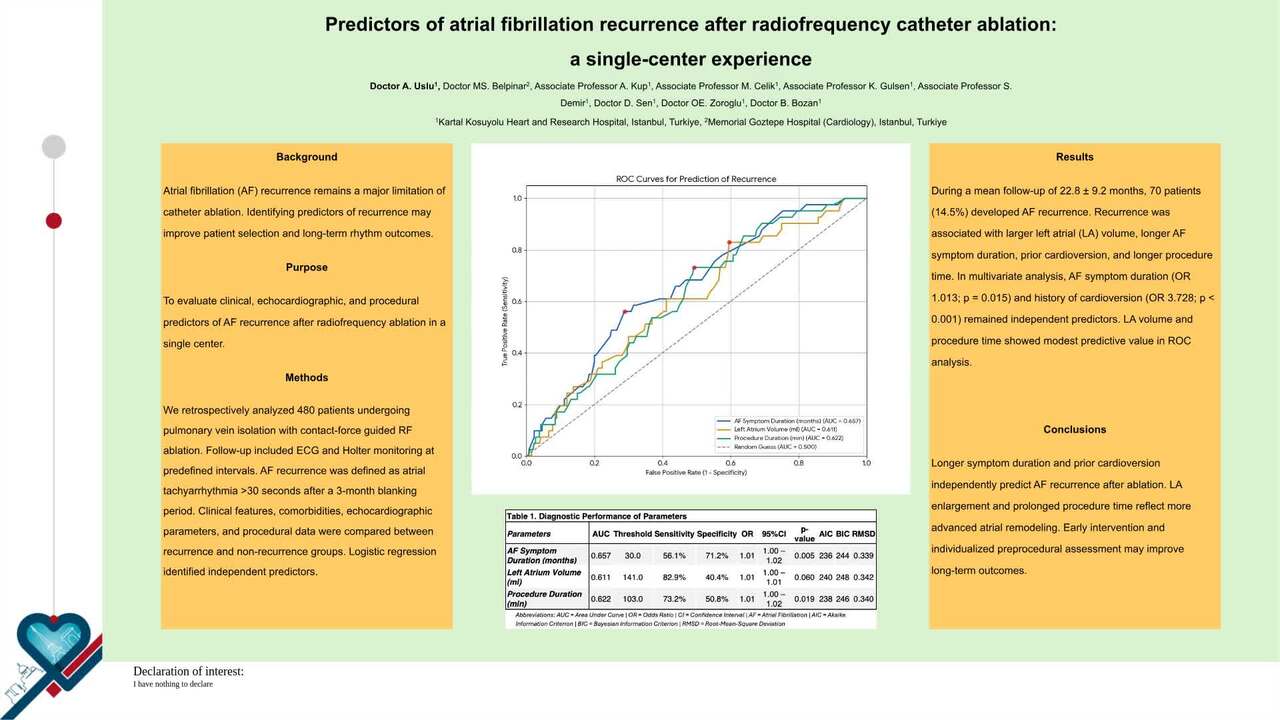
Catheter ablation of paroxysmal atrial fibrillation (AF) reduces AF recurrence, AF burden, and improves quality of life. Data on clinical and procedural predictors of arrhythmia recurrence are scarce and are flawed by the high rate of pulmonary vein reconnection evidenced during repeat procedures after pulmonary vein isolation (PVI). In this study, we identified clinical and procedural predictors for AF recurrence 1 year after CLOSE-guided PVI, as this strategy has been associated with an increased PVI durability.
Patients with paroxysmal AF, who received CLOSE-guided PVI and who participated in a prospective trial in our centre, were included in this study. Uni- and multivariate models were plotted to find clinical and procedural predictors for AF recurrence within 1 year. Three hundred twenty-five patients with a mean age of 63 years (CHA2DS2VASc 1 [1–3], left atrium diameter 41 ± 6 mm) were included. About 60.9% were male individuals. After 1 year, AF recurrence occurred in 10.5% of patients. In a binary logistic regression analysis, the diagnosis-to-ablation time (DAT) was found to be the strongest predictor of AF recurrence (
The DAT is the most important predictor of arrhythmia recurrence in low-risk patients treated with durable pulmonary vein isolation for paroxysmal AF. Whether reducing the DAT could improve long-term outcomes should be investigated in another trial.
Contributors

Jan De Pooter
Author
Michael Wolf
Author
Philippe Unger
Author
Yves Vandekerckhove
Author
René Tavernier
Author
Michelle Lycke
Author
Mattias Duytschaever
Author
Sébastien Knecht
Author
Maria Kyriakopoulou
Author
Milad El Haddad
Author
Jean-Yves Wielandts
Author
Gabriela Hilfiker
Author
Alexandre Almorad
Author
Teresa Strisciuglio
Author
You may be interested in