The effect of a game-based mobile app ‘MyHeartMate’ to promote lifestyle change in coronary disease patients: a randomized controlled trial
European Heart Journal - Digital Health


Abstract
Secondary prevention reduces coronary heart disease (CHD) progression. Traditional prevention programs including cardiac rehabilitation are under-accessed, which smartphone apps may overcome. To evaluate the effect of a game-based mobile app intervention (MyHeartMate) to improve cardiovascular risk factors and lifestyle behaviours.
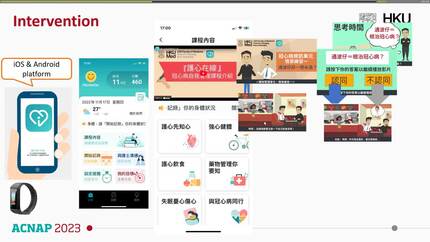
Single-blind randomized trial of CHD patients in Sydney, 2017–2021. Intervention group were provided the MyHeartMate app for 6 months. Co-designed features included an avatar of the patient’s heart and tokens earned by risk factor work (tracking, challenges, and quizzes). The control group received usual care. Primary outcome was self-reported physical activity [metabolic equivalents (METs), Global Physical Activity Questionnaire] and secondary outcomes included lipid levels, blood pressure (BP), body mass index, and smoking. Pre-specified sample size was achieved (
A game-based app proved highly acceptable for patients with CHD but did not improve risk factors or lifestyle behaviours other than triglyceride levels.
Contributors


Clara K Chow
Author
Helen Parker
Author

Lis Neubeck
Author
Edinburgh Napier University Edinburgh , United Kingdom of Great Britain & Northern Ireland
David S Celermajer
Author
Julie Redfern
Author
Geoffrey Tofler
Author
Thomas Buckley
Author
Tracy Schumacher
Author
Karice Hyun
Author
Farzaneh Boroumand
Author

You may be interested in