“In the tube” following sternotomy: A quasi-experimental study
European Journal of Cardiovascular Nursing


Abstract
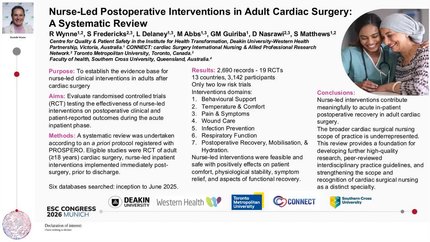
Traditionally, physical movement has been limited for cardiac surgery patients, up to 12-weeks post-operatively. Patients are asked to use “standard sternal precautions,” restricting their arm movement, and thereby limiting stress on the healing sternum.
To compare return to function, pain/discomfort, wound healing, use of pain medication and antibiotics, and post-operative length of hospital stay in cardiac surgery patients having median sternotomy who used standard sternal precautions or Keep Your Move in the Tube movement protocols post-operatively.
A quasi-experimental design was used (100 standard sternal precautions and 100 Keep Your Move in the Tube patients). Patients were followed in person or by telephone over a period of 12-weeks postoperatively. Outcomes were measured at day 7, as well as weeks 4, 8, and 12 weeks.
The majority of participants (77% in each group) were male and had coronary artery bypass graft surgery (66% standard sternal precautions and 72% Keep Your Move in the Tube). Univariate analysis revealed the standard sternal precautions group had lesser ability to return to functional activities than the Keep Your Move in the Tube group (
Keep Your Move in the Tube, a novel patient-oriented movement protocol, has potential for cardiac surgery patients to be more confident and comfortable in their recovery.

You may be interested in