How a pandemic changed advanced nurse practitioner (ANP) chest pain assessment from face-to-face to virtual: The impact on clinical workload, diagnosis & patient safety
European Journal of Cardiovascular Nursing


Abstract
Type of funding sources: None.
Chest pain presentations to the Emergency Dept. (ED) account for 8% of ED cases annually. In response to the pandemic the usual care pathway of nurse-led assessment in ED and discharge to a chest pain clinic (Ingram 2017) ceased, as face-to-face clinics and diagnostics were curtailed, and staff redeployed. A virtual chest pain clinic was created by one ANP. Telehealth is defined as ‘the entire spectrum of activities used to deliver care remotely, without direct physical contact with the patient’ (Wosik 2020)
This analysis aims to compare the outcomes of the Covid-19 virtual chest pain clinic in 2020 to the same face-to- face clinic period in 2019 with a focus on i. Clinic workload, ii. Patient Outcomes iii. Patient Safety,
The ANP performed a telephone consultation and referred for limited diagnostic testing or discharged to primary care. The patient management system (iPIMS) was used as a clinical and audit tool. This service evaluation was registered as quality improvement project.
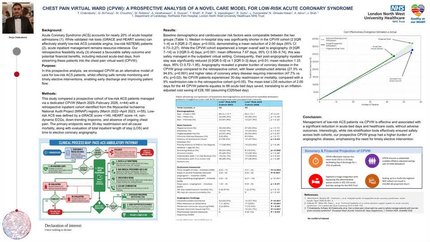
From 1/4/20 to 21/7/2020, 130 e-referrals were received compared to 154 face-to-face consults in the same period of 2019. The overall number of clinic episodes was 17% greater during the pandemic period (Fig.1), carried out by 1/3 of the 2019 staff quota. Access to exercise stress testing (EST) was reduced by 88%. CHD was diagnosed in 26%. Virtual assessment in this high risk group in the absence of timely diagnostics is a risk however 30 day mortality was 0%.
The pandemic of covid-19 required a rapid redesign of the chest pain service in the midst of staff redeployment. Whilst the total number of referrals is less that the same timeframe in 2019 the ‘virtual’ nature of the service created additional episodes of care with the need for the return clinic in person or by telephone.
In response to the pandemic the change to a virtual clinic was enabled by ANP experience and permitted continued safe discharge of chest pain patients from the ED. The virtual service does add to the ANP clinical workload with potential risk. As it requires more office time, it prevents the ANP presence in the ED. It is hoped in time to return to the original model of care as this will be more efficient for the service and the patient.
Abstract Figure.
Contributors

S Ingram
Author
You may be interested in