Short-term e-cigarette vapour exposure causes vascular oxidative stress and dysfunction: evidence for a close connection to brain damage and a key role of the phagocytic NADPH oxidase (NOX-2)
European Heart Journal


Abstract
Electronic (e)-cigarettes have been marketed as a ‘healthy’ alternative to traditional combustible cigarettes and as an effective method of smoking cessation. There are, however, a paucity of data to support these claims. In fact, e-cigarettes are implicated in endothelial dysfunction and oxidative stress in the vasculature and the lungs. The mechanisms underlying these side effects remain unclear. Here, we investigated the effects of e-cigarette vapour on vascular function in smokers and experimental animals to determine the underlying mechanisms.
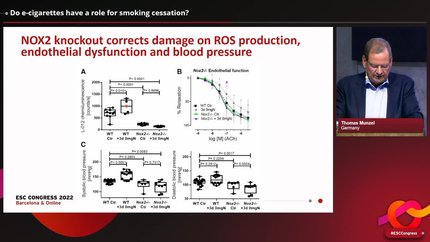
Acute e-cigarette smoking produced a marked impairment of endothelial function in chronic smokers determined by flow-mediated dilation. In mice, e-cigarette vapour without nicotine had more detrimental effects on endothelial function, markers of oxidative stress, inflammation, and lipid peroxidation than vapour containing nicotine. These effects of e-cigarette vapour were largely absent in mice lacking phagocytic NADPH oxidase (NOX-2) or upon treatment with the endothelin receptor blocker macitentan or the FOXO3 activator bepridil. We also established that the e-cigarette product acrolein, a reactive aldehyde, recapitulated many of the NOX-2-dependent effects of e-cigarette vapour using
E-cigarette vapour exposure increases vascular, cerebral, and pulmonary oxidative stress via a NOX-2-dependent mechanism. Our study identifies the toxic aldehyde acrolein as a key mediator of the observed adverse vascular consequences. Thus, e-cigarettes have the potential to induce marked adverse cardiovascular, pulmonary, and cerebrovascular consequences. Since e-cigarette use is increasing, particularly amongst youth, our data suggest that aggressive steps are warranted to limit their health risks.
Contributors

Marin Kuntic
Author
Matthias Oelze
Author
Sebastian Steven
Author
Swenja Kröller-Schön
Author
Paul Stamm
Author
Sanela Kalinovic
Author
Katie Frenis
Author
Ksenija Vujacic-Mirski
Author
Maria Teresa Bayo Jimenez
Author
Miroslava Kvandova
Author
Konstantina Filippou
Author
Ahmad Al Zuabi
Author
Vivienne Brückl
Author
Omar Hahad
Author
Steffen Daub
Author
Franco Varveri
Author
Tommaso Gori
Author
Regina Huesmann
Author
Thorsten Hoffmann
Author
Frank P Schmidt
Author
John F Keaney
Author


You may be interested in