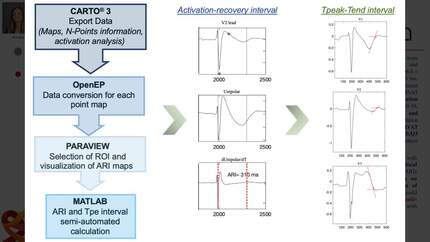
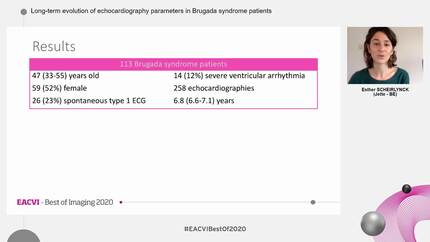
Prognostic value of right ventricular refractory period heterogeneity in Type-1 Brugada electrocardiographic pattern
EP Europace Journal


Abstract
To investigate the prognostic significance of heterogeneity in the refractoriness of right ventricular (RV) outflow tract (RVOT) and RV apex at the electrophysiological study (EPS) in Brugada syndrome (BrS).
A cohort of BrS patients (primary prevention) from five Italian centres was retrospectively analysed. Patients with spontaneous or drug-induced Type-1 electrocardiogram (ECG) + symptoms were offered an EPS for prognostic stratification. The primary endpoint was a composite of sudden cardiac death (SCD), resuscitated cardiac arrest, or appropriate intervention by the implantable cardioverter-defibrillator (ICD). Three hundred and seventy-two patients with BrS were evaluated (44 ± 15 years, 69% males, 23% with ICD): 4 SCDs and 17 ICD interventions occurred at follow-up (median 48, interquartile range: 36–60 months). Family history of SCD, syncope, and a spontaneous Type-1 ECG pattern were univariate predictors of the primary endpoint in the whole population. In patients undergoing EPS (
Heterogeneity of RV refractory periods is a strong, independent predictor of life-threatening arrhythmias in BrS patients, beyond VT/VF inducibility at EPS and common clinical predictors.
Contributors

Andrea Rossi
Author
Alberto Giannoni
Author
Martina Nesti
Author
Pasquale Notarstefano
Author

Gianluca Solarino
Author

Gianluca Mirizzi
Author

Luca Panchetti
Author
Umberto Startari
Author
Andrea Ripoli
Author


Nicoletta Botto
Author
Giancarlo Casolo
Author
Juan Sieira
Author
Maurizio Pieroni
Author
Pasquale Santangeli
Author
Michele Emdin
Author
Marcello Piacenti
Author
You may be interested in