Patient-prosthesis mismatch in new generation trans-catheter heart valves: a propensity score analysis
European Heart Journal - Cardiovascular Imaging


Abstract
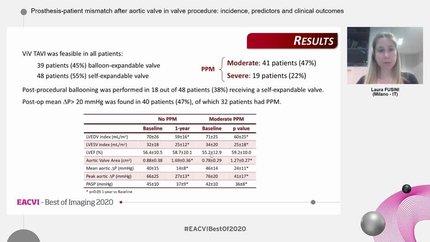
When compared with the former Sapien XT (XT-THV), the Sapien 3 trans-catheter heart valve (S3-THV) embeds an outer annular sealing cuff to prevent para-valvular regurgitation (PVR). The consequences of this new feature on valve haemodynamics have never been evaluated. We aimed to compare both types of prostheses regarding patient-prosthesis mismatch (PPM).
Patients who underwent a TAVR for aortic stenosis were retrospectively included. Regression adjustment for the propensity score was used to compare 50 XT-THV patients with 71 S3-THV. At the 1-month follow-up, the mean indexed effective orifice area (iEOA) was 1.12 ± 0.34 cm2/m2 with XT-THV and 0.96 ± 0.27 cm2/m2 with S3-THV. The mean gradient was 11 ± 5 mmHg and 13 ± 5 mmHg, respectively. Nine patients had moderate PPM, and two exhibited severe PPM with XT-THV. Nineteen patients had moderate PPM, and seven demonstrated severe PPM with S3-THV. There was a five-fold increased risk of PPM with S3-THV (OR = 4.98; [1.38–20.94],
There is an increased risk of PPM with 23mm S3-THV in comparison with 23 mm XT-THV. This may be attributable to the additional sub-annular cuff that avoids the risk of PVR. Regarding the increased vulnerability of younger patients to PPM, we provide essential information on the extension of TAVR indication to the younger population.
Contributors


Johan Pinto
Author
Dominique Grisoli
Author
Karolina Griffiths
Author
Erwan Salaun
Author
Nicolas Jaussaud
Author
Eléonore Ravis
Author
Marc Lambert
Author
Lyna Messous
Author
Cecile Amanatiou
Author
Thomas Cuisset
Author
Vlad Gariboldi
Author
Roch Giorgi
Author
Gilbert Habib
Author
Frederic Collart
Author
You may be interested in