Impact of pulmonary hypertension on long-term outcome in patients with severe aortic stenosis
European Heart Journal - Cardiovascular Imaging


Abstract
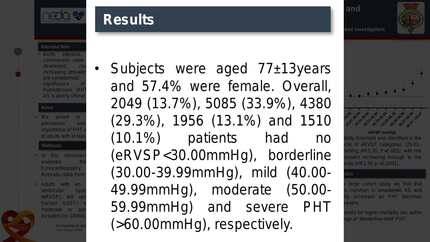
Pulmonary hypertension (PH) is common in severe symptomatic left-sided valvular disease, particularly in aging populations. Inconsistent results have been reported concerning the association between PH and adverse outcomes after aortic valve replacement for aortic stenosis (AS). We therefore retrospectively investigated the prognostic significance of PH using peak tricuspid regurgitation velocity (TRV), as defined by the current European Society of Cardiology (ESC)/European Respiratory Society (ERS) guidelines, in a large cohort of patients with severe AS.
One thousand and nineteen patients (541 men; mean age 74 ± 11 years) with severe AS (aortic valve area (AVA) <1 cm2 and/or indexed AVA <0.6 cm2/m2 of body surface area) and LV ejection fraction ≥50% were included. Patients were divided into three groups according to the level of their peak TRV at the time of enrolment: Group 1 (
This study demonstrates the negative impact of pulmonary pressure, as assessed by current ESC/ERS guidelines, on long-term outcome of patients with severe AS, irrespective of functional status, chronic obstructive pulmonary disease, AS severity and surgery. Baseline TRV should therefore be taken into account in the management of severe AS.
Contributors

Franck Levy
Author
Yohann Bohbot
Author
Khalil Sanhadji
Author
Dan Rusinaru
Author
Anne Ringle
Author
Quentin Delpierre
Author
Sondes Smaali
Author
Mesut Gun
Author
Sylvestre Marechaux
Author
You may be interested in