Prognostic importance of the transmitral pressure gradient in mitral annular calcification with associated mitral valve dysfunction
European Heart Journal


Abstract
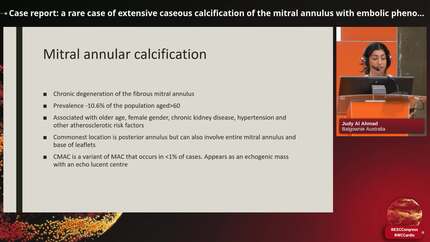
The aim of this study was to define the natural history of patients with mitral annular calcification (MAC)-related mitral valve dysfunction and to assess the prognostic importance of mean transmitral pressure gradient (MG) and impact of concomitant mitral regurgitation (MR).
The institutional echocardiography database was examined from 2001 to 2019 for all patients with MAC and MG ≥3 mmHg. A total of 5754 patients were stratified by MG in low (3–5 mmHg,
In MAC-related mitral valve dysfunction, mean transmitral gradient is associated with increased mortality after adjustment for age, sex, and MAC-related risk factors. Concomitant MR is associated with excess mortality in low-gradient ranges (3–5 mmHg) but gradually loses prognostic importance at higher gradients, indicating prognostic utility of transmitral gradient in MAC regardless of MR severity.
Contributors


Timothy W Churchill
Author
Evin Yucel
Author
Mayooran Namasivayam
Author
Samuel Bernard
Author
Yasufumi Nagata
Author
Wei He
Author
Carl T Andrews
Author

Arthur E Weyman
Author
Robert A Levine
Author
Judy Hung
Author
You may be interested in