Clinical impact of PCSK9 inhibitor on stabilization and regression of lipid-rich coronary plaques: a near-infrared spectroscopy study
European Heart Journal - Cardiovascular Imaging


Abstract
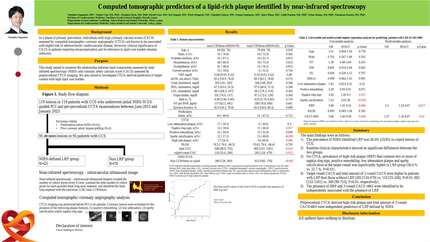
This study aimed to determine the effects of a proprotein convertase subtilisin-kexin type 9 inhibitor (PCSK9i) on coronary plaque volume and lipid components in patients with a history of coronary artery disease (CAD).
This prospective, open-label, single-centre study analysed non-culprit coronary segments using near-infrared spectroscopy-intravascular ultrasound (NIRS-IVUS) at baseline and follow-up angiography. Following changes in the lipid-lowering treatment based on the most recent guideline, the enrolled subjects were divided into two groups: treatment with PCSK9i and statins (PCSK9i: 21 patients and 40 segments) and statins only (control: 32 patients and 50 segments). The absolute and percent LDL-C reductions were significantly greater in the PCSK9i group than in the control group (between group difference: 59.3 mg/dL and 46.4%;
The lipid component of non-culprit coronary plaques was significantly decreased by PCSK9i. The effects of statin combined with PCSK9i might be attributed to the stabilization and regression of residual vulnerable coronary plaques in patients with CAD.
Contributors

You may be interested in