A comparison of the clinical efficacy of echocardiography and magnetic resonance for chronic aortic regurgitation
European Heart Journal - Cardiovascular Imaging


Abstract
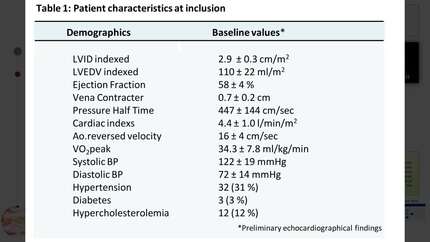
Timing surgery in chronic aortic regurgitation (AR) relies mostly on echocardiography. However, cardiac magnetic resonance (CMR) may be more accurate for quantifying regurgitation and left ventricular (LV) remodelling. We aimed to compare the technical and clinical efficacies of echocardiography and CMR to account for the severity of the disease, the degree of LV remodelling, and predict AR-related outcomes.
We studied 263 consecutive patients with isolated AR undergoing echocardiography and CMR. After a median follow-up of 33 months, 76 out of 197 initially asymptomatic patients reached the primary endpoint of AR-related events: 6 patients (3%) were admitted for heart failure, and 70 (36%) underwent surgery. Adjusted survival models based on CMR improved the predictions of the primary endpoint based on echocardiography:
CMR improves the clinical efficacy of ultrasound for predicting outcomes of patients with AR. This is due to its better reproducibility and accuracy for grading the severity of the disease and its impact on the LV. Regurgitant fraction, LV ejection fraction, and end-diastolic volume obtained by CMR most adequately predict AR-related events.
Contributors

Andrea Postigo
Author
Esther Pérez-David
Author
Ana Revilla
Author
Ladrón Abia Raquel
Author
Ana González-Mansilla
Author
Raquel Prieto-Arévalo
Author
M Ángeles Espinosa
Author
Rosa Ana López-Jimenez
Author
Teresa Sevilla
Author
Noelia Urueña
Author
Pablo Martínez-Legazpi
Author
José M Oliver
Author
Francisco Fernández-Avilés
Author
San Román J. Alberto
Author

You may be interested in