Transfemoral aortic valve implantation: procedural hospital volume and mortality in Germany
European Heart Journal


Abstract
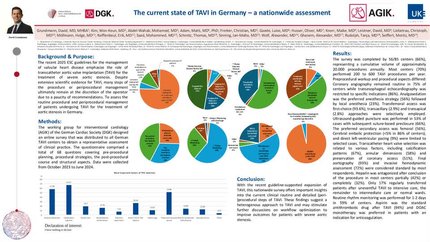
Studies assessing transfemoral transcatheter aortic valve implantation (TF-TAVI) showed lower rates of in-hospital mortality at high-volume hospitals and minimum caseloads were recommended to assure quality standards.
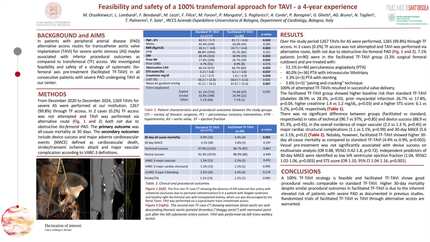
All patients in the German mandatory quality assurance registry with elective or urgent TF-TAVI procedures in 2018 and 2019 at 81 and 82 hospitals, respectively, were analysed. Observed in-hospital mortality was adjusted to expected mortality by the German AKL-KATH score (O/E) as well as by the EuroScore II (O/E2). Hospital volume and O/E were correlated by regression analyses and volume quartiles. 18 763 patients (age: 81.1 ± 1.0 years, mean EuroSCORE II: 6.9 ± 1.8%) and 22 137 patients (mean age: 80.7 ± 3.5 years, mean EuroSCORE II: 6.5 ± 1.6%) were analysed in 2018 and 2019, respectively. The average observed in-hospital mortality was 2.57 ± 1.83% and 2.36 ± 1.60%, respectively. Unadjusted in-hospital mortality was significantly inversely related to hospital volume by linear regression in both years. After risk adjustment, the association between hospital volume and O/E was statistically significant in 2019 (
The association between hospital volume and in-hospital mortality in patients undergoing elective TF-TAVI in Germany in 2018 and 2019 was weak and not consistent throughout various analytical approaches, indicating no clinical relevance of hospital volume for the outcome. However, these data were derived from a healthcare system with restricted access to hospitals to perform TAVI and overall high TAVI volumes. Instead of the unprecise surrogate hospital volume, the quality of hospitals performing TF-TAVI should be directly assessed by real achieved risk-adjusted mortality.
Contributors

Kurt Bestehorn
Author
Maike Bestehorn
Author
Ralf Zahn
Author
Christian Perings
Author
Christoph Stellbrink
Author
You may be interested in