Cardiac troponin release following coronary artery bypass grafting: mechanisms and clinical implications
European Heart Journal


Abstract
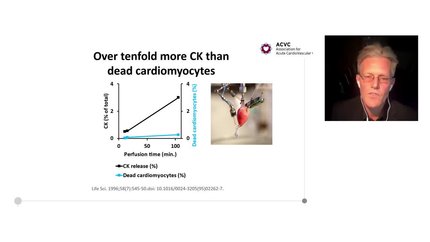
The use of biomarkers is undisputed in the diagnosis of primary myocardial infarction (MI), but their value for identifying MI is less well studied in the postoperative phase following coronary artery bypass grafting (CABG). To identify patients with periprocedural MI (PMI), several conflicting definitions of PMI have been proposed, relying either on cardiac troponin (cTn) or the MB isoenzyme of creatine kinase, with or without supporting evidence of ischaemia. However, CABG inherently induces the release of cardiac biomarkers, as reflected by significant cTn concentrations in patients with uncomplicated postoperative courses. Still, the underlying (patho)physiological release mechanisms of cTn are incompletely understood, complicating adequate interpretation of postoperative increases in cTn concentrations. Therefore, the aim of the current review is to present these potential underlying mechanisms of cTn release in general, and following CABG in particular (
Contributors

Can Gollmann-Tepeköylü
Author
Ellen J S Denessen
Author
Jules R Olsthoorn
Author
Jamie L R Romeo
Author
Jos G Maessen
Author
Arnoud W J van ‘t Hof
Author
Otto Bekers
Author
Ola Hammarsten
Author
Leo Pölzl
Author
Johannes Holfeld
Author
Nikolaos Bonaros
Author
Iwan C C van der Horst
Author
Sean M Davidson
Author
Matthias Thielmann
Author
Alma M A Mingels
Author
You may be interested in