A polygenic risk score predicts atrial fibrillation in cardiovascular disease
European Heart Journal


Abstract
Interest in targeted screening programmes for atrial fibrillation (AF) has increased, yet the role of genetics in identifying patients at highest risk of developing AF is unclear.
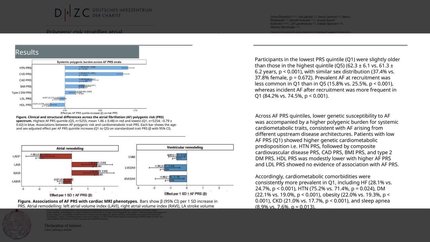
A total of 36,662 subjects without prior AF were analyzed from four TIMI trials. Subjects were divided into quintiles using a validated polygenic risk score (PRS) for AF. Clinical risk for AF was calculated using the CHARGE-AF model. Kaplan–Meier event rates, adjusted hazard ratios (HRs),
In patients with cardiovascular conditions, AF PRS is a strong independent predictor of incident AF that provides complementary predictive value when added to a validated clinical risk score and NT-proBNP.
Contributors

Nicholas A Marston
Author
Brigham and Women's Hospital, Heart and Vascular Center Boston , United States of America

Amanda C Garfinkel
Author
Frederick K Kamanu
Author
Giorgio M Melloni
Author
Carolina Roselli
Author
Petr Jarolim
Author
David D Berg
Author
Deepak L Bhatt
Author
Marc P Bonaca
Author

Robert P Giugliano
Author
Michelle L O’Donoghue
Author
Itamar Raz
Author
Benjamin M Scirica
Author
Eugene Braunwald
Author
David A Morrow
Author

Steven A Lubitz
Author
Marc S Sabatine
Author
Christian T Ruff
Author
You may be interested in