MR-proANP improves prediction of mortality and cardiovascular events in patients with STEMI
European Journal of Preventive Cardiology


Abstract
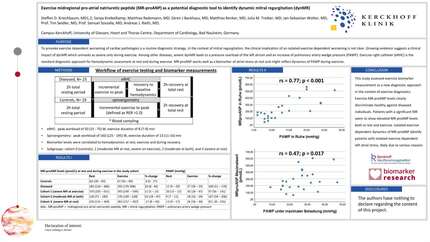
Atrial natriuretic peptide (ANP) is released from the atria (on cleavage of proANP) in response to elevated intra-atrial pressure and wall stretch. Clinical data on proANP are still limited, mainly due to limitations in assaying the protein, which recently have been solved. ProANP is elevated in cardiovascular disease and predicts outcome in heart failure. However, knowledge of the prognostic value in acute myocardial infarction remains limited.
We prospectively included 680 patients with STEMI treated with primary-PCI, from September 2006 to December 2008. Blood samples were drawn immediately before PCI. Plasma MR-proANP was measured using an automated processing assay. Endpoints were all-cause mortality (n = 137) and the combined endpoint (n = 170) of major adverse cardiovascular events (MACE) defined as cardiovascular mortality and admission due to recurrent MI, ischaemic stroke or heart failure.
During 5-year follow-up, MR-proANP was associated with increased risk of all-cause mortality and MACE (both
MR-proANP significantly increased C-statistics and reclassified 26% of the patients for all-cause mortality and 34% for MACE into higher or lower risk categories, matching actual event rates more accurately.
Plasma MR-proANP independently predicts all-cause mortality and MACE in patients with STEMI.
Contributors

Jan Skov Jensen
Author
Sune H Pedersen
Author
Søren Galatius
Author
Jens P Goetze
Author
Rasmus Mogelvang
Author
You may be interested in