Heart failure is associated with exaggerated endothelial ischaemia–reperfusion injury and attenuated effect of ischaemic preconditioning
European Journal of Preventive Cardiology


Abstract
Reperfusion is mandatory after ischaemia, but it also triggers ischaemia–reperfusion (IR)-injury. It is currently unknown whether heart failure alters the magnitude of IR-injury. Ischaemic preconditioning can limit IR-injury. Since ischaemic preconditioning is typically applied in subjects at risk for cardiovascular complications, it is of clinical importance to understand its efficacy in heart failure patients.
To examine the magnitude of endothelial IR-injury, and the ability of ischaemic preconditioning to protect against endothelial IR-injury in heart failure.
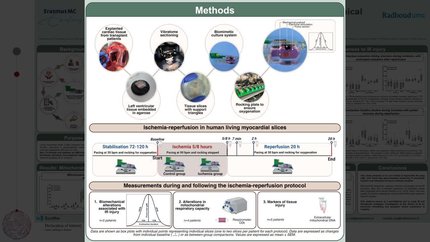
We included 15 subjects with heart failure (67 ± 10 years, New York Heart Association class II/III) and 15 healthy, age- and sex-matched controls (65 ± 9 years). We examined brachial artery endothelial function using flow-mediated dilation before and after arm IR (induced by 5-min ischaemic handgrip exercise +15 min reperfusion). IR was preceded by ischaemic preconditioning (consisting in three cycles of 5-min upper arm cuff inflation to 220 mmHg) or no inflation.
A significant interaction-effect was found for the change in flow-mediated dilation after IR between groups (two-way ANOVA interaction-effect:
We found that patients with heart failure are associated with exaggerated endothelial IR-injury compared with age- and sex-matched, healthy controls, which may contribute to the poor clinical prognosis in heart failure. Furthermore, we found no protective effect of ischaemic preconditioning (3 × 5-min forearm ischaemia) against endothelial IR-injury in heart failure patients.
Contributors

Joost PH Seeger
Author
Nathalie MM Benda
Author
Niels P Riksen
Author
Arie PJ van Dijk
Author
Louise Bellersen
Author
Maria TE Hopman
Author
N Timothy Cable
Author
You may be interested in