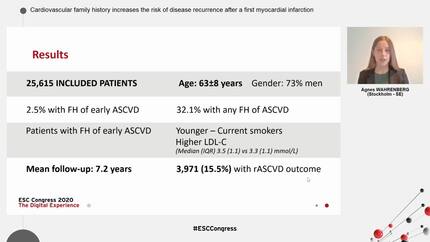
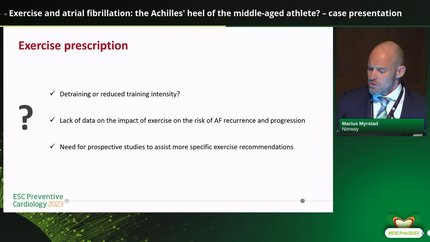
Risk of recurrent ischaemic events after myocardial infarction in long-distance ski race participants
European Journal of Preventive Cardiology


Abstract
To study whether a high level of physical activity prior to myocardial infarction (MI) also protects against recurrent MI (re-MI) or death.
A longitudinal study of a primary cohort consisting of 204,038 skiers with a proved substantially high level of physical activity in the world’s largest long-distance ski race, Vasaloppet, and 499,543 non-skiers selected from the Swedish population. Individuals with severe diseases at baseline were excluded. In the nationwide clinical register, Swedeheart, we identified 7092 individuals with a first MI incident between 1989 and 2010. Of these, 1039 (0.5%) were skiers and 6053 (1.2%) were non-skiers. One hundred and sixty-three (15.7%) skiers and 1352 (22.3%) non-skiers suffered a re-MI or died during follow-up (median 4.44 years), corresponding to an incidence rate of 38.9 (95% confidence interval (CI) 33.2–45.4)/1000 person-years and 55.6 (95% CI 52.7–58.7)/1000 person-years, respectively. Severity of MI in both groups was the same. For skiers compared to non-skiers the unadjusted hazard ratio (HR) for re-MI was 0.66 (95% CI 0.52–0.82). For death or re-MI, HR was 0.70 (95% CI 0.59–0.82) with consistent results in subgroups based on race year, age, gender, education level, marital status. After adjustment for also smoking, diabetes, hypertension and cardiovascular medication, HR was 0.80 (95% CI 0.67–0.97).
This large cohort study supports the hypothesis that patients with MI and with prior physical activity and healthy lifestyle, as evidenced by their participation in a long-distance ski race, have a lower risk of subsequent re-MI or death.
Contributors

Ulf Hållmarker
Author
Karl Michaëlsson
Author
Johan Ärnlöv
Author
Dan Hellberg
Author
Bo Lagerqvist
Author
Johan Lindbäck
Author
Stefan James
Author
You may be interested in