A novel strategy for evaluating tilt test in athletes with syncope
European Journal of Preventive Cardiology


Abstract
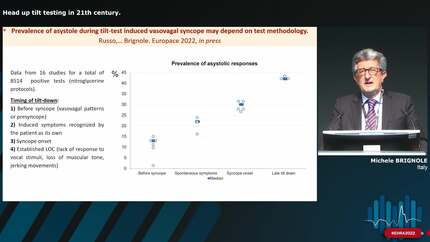
The tilt test is used for the diagnosis of reflex syncope (RS) and is characterized by low sensitivity, especially in athletes. The objective of the study was the implementation of a novel diagnostic strategy for the tilt test without pharmacologic provocation in athletes based on haemodynamic criteria.
A passive tilt test for 30 min was performed in 132 athletes (53 with a history of RS, 79 without RS). Measurement of haemodynamic, heart rate variability (HRV) and baroreflex sensitivity parameters was performed.
Tilt testing yielded 34% sensitivity and 94% specificity. Among negative tilt test responders, the ones with RS had increased heart rate (HR) (89 ± 11 vs 81 ± 10 bpm,
Our results provide supportive evidence that a novel stratification based on haemodynamic criteria can improve the sensitivity of the tilt test for the diagnosis of RS in athletes.
Contributors

Georgios A Christou
Author
Evangelia J Kouidi
Author
Maria A Anifanti
Author
Panagiota G Sotiriou
Author

You may be interested in