Cardiac rehabilitation programme as a non-pharmacological platelet inhibitory tool in acute coronary syndrome survivors
European Journal of Preventive Cardiology


Abstract
Acute coronary syndrome is associated with platelet hyperactivity, which in its persistent form, promotes recurrent thrombotic events. Complex cardiac rehabilitation after acute coronary syndrome improves clinical outcome; however, its effect on platelet hyperactivity is unknown.
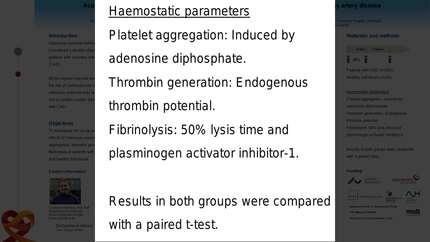
We enrolled 84 acute coronary syndrome patients on dual antiplatelet therapy, who underwent a new complex cardiac rehabilitation programme (NovaCord physiotherapy, lifestyle counselling, strict diet, stress management and regular coaching) and 51 control acute coronary syndrome patients with traditional cardiac rehabilitation. Platelet functionality was determined at enrolment and at three months follow-up by aggregometry, serum platelet-derived growth factor levels, total- and platelet-derived microvesicle counts (PMV; CD41a+/CD61+, CD62P+).
Platelet aggregation parameters and platelet-derived growth factor levels were significantly decreased in the complex cardiac rehabilitation group at three months (1 µg/ml collagen, median (interquartile range): 22 (10–45) vs 14 (7.5–25.5)%,
Platelet hyperactivity three months after acute coronary syndrome significantly decreased in patients undergoing complex cardiac rehabilitation. Besides dual antiplatelet therapy, effective management and comprehensive control of cardiovascular risk factors might represent a new, non-pharmacological approach to influence platelet functionality.
Contributors

Zsófia Horváth
Author
László Hajtman
Author
Sarolta Leé
Author
Éva Pállinger
Author
Eszter Kuklis
Author
Ádám Tahy
Author
György Fekete
Author
László Kohut
Author
Róbert G Kiss
Author
You may be interested in