The I4RON-HF study, Intravenous Iron Isomaltoside for Inpatients veRsus Outpatient Asians with Heart Failure
European Heart Journal


Abstract
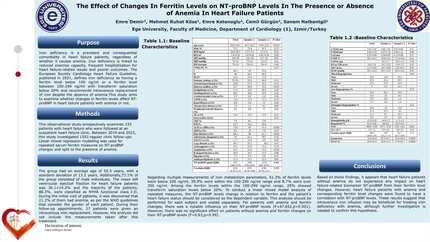
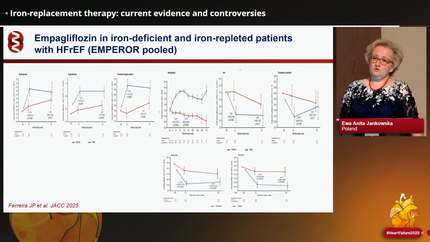
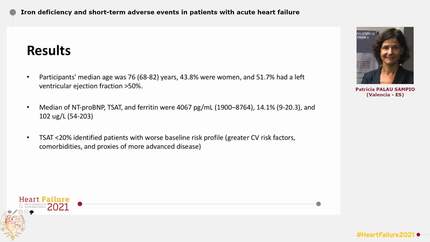
Iron deficiency (ID) impacts ∼50% of heart failure (HF) patients [1] and is a risk factor and strong predictor for death and mortality with or without anaemia [2]. Oral iron appears to be ineffective whilst intravenous iron (IV-iron) has proven to be efficacious however data is primarily from a Caucasian population [3] despite ID being more prevalent amongst Asians. The I4RON-HF study assesses efficacy of high-dose IV-iron versus oral iron in stable outpatients and inpatients amongst an Asian population recovering from episodes of decompensated HF.
This is a single-centre randomized controlled study, where patients who had symptomatic heart failure (Ejection Fraction <50% and New York Heart Association class 2–3) were randomized into two groups. The intervention arm received anywhere from 500mg to 1500mg of IV Iron Isomaltoside as a single infusion, whereas the control arm received routine iron supplements.
The primary study endpoint was the percentage of patients achieving iron repletion at 4,8 and 12 months after enrolment. Secondary endpoints included clinical parameters (6-minute walk test, NYHA status and 2D-Echocardiogram), and biochemical parameters (Serum NTproBNP, Cardiac Troponin-T and hemogloblin) at 4,8 and 12 months.
A total of 65 patients were enrolled (male 55%), 33 in the interventional arm and 32 in the control arm. There were no patients lost to follow up. 96.9% of patients in the IV Iron arm achieved the primary endpoint at 4 months, compared to 68.7% in the control group. These findings we consistent at 8 months (90.9% vs 65.6%) and 12 months (90.9% vs 56.2%). Looking at the secondary endpoints, the IV Iron cohort recorded a 11.14% increase in Hemogloblin levels versus the control arm which recorded a reduction of 16.23%. There was also lower NTproBNP levels in the IV iron group (81.6% reduction) versus the control group (66.3% reduction). Clinically, the patients who received IV iron had a 42.98% increase in their 6-minute walk test from baseline, compared to an increase of 8.61% in the control arm. There were no significant echocardiographic changes.
These findings in our single-centre study support the efficacy of IV iron over oral supplements in the treatment of iron deficiency amongst Asian heart failure patients. The secondary endpoints also indicate better clinical and biochemical outcomes when iron stores are successfully repleted. Lastly, this study demonstrates the feasibility and safety of outpatient administration of high-dose IV-iron. Results from large-scale clinical studies looking at hard endpoints (mortality, HF hospitalization) are expected to further advance understandings.
Type of funding sources: Foundation. Main funding source(s): National Heart Institute (Institut Jantung Negara) FoundationCompai Pharma
Contributors

N Fatini
Author
A Ghazi
Author
T Lee
Author
K C Teh
Author
R Sundram
Author
A Ariff
Author
A Roslan
Author
M Sundarajoo
Author
M Y Low
Author
C S H Ong
Author
S E Goay
Author
G Palaniappan
Author
N Norasiah
Author
N Syamira
Author
You may be interested in