Cardiomyopathy associated with right ventricular apical pacing – systematic review and meta-analysis
European Heart Journal


Abstract
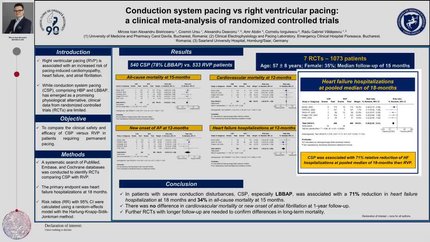
Bradyarrhythmias are potentially life threatening medical conditions. The most widespread type of treatment of slow rhythms is artificial ventricular pacing. From the inception of the idea of artificial pacing, ventricular lead was located in the apex of the right ventricle. Right ventricular pacing (RVP) was thought to have deteriorating effect on left ventricular systolic function. The aim of this study was to systematically assess results of randomized controlled trials of the right ventricular pacing on left ventricular ejection fraction (LVEF).
We systematically searched the Cochrane Central Register of Controlled Trials, PubMed, and EMBASE databases for studies evaluating the influence of the RVP on the LVEF. Pooled mean difference (MD) with a 95% confidence interval (CI) was estimated using a random effect model.
15 randomized controlled trials (RCTs) comprising 951 patients were included. The mean follow-up in the included studies ranged between 6 to 24 months. In our meta-analysis, RV pacing was associated with statistically significant (MD 2.91; 95% confidence interval (CI): 1.07–4.75) left ventricular systolic function impairment measured by LVEF.
Our meta-analysis confirms, that the right ventricular pacing is associated with progressive deterioration of the left ventricular systolic function.
Type of funding sources: None.
Forest plot LVEF
Contributors

A Osiecki
Author
W Kochman
Author
K K Witte
Author
M Manczak
Author
R Olszewski
Author
D Michalkiewicz
Author
You may be interested in