The case against premature treatment of heart failure patients with implantable cardioverter-defibrillators: results from an institutional registry
European Heart Journal


Abstract
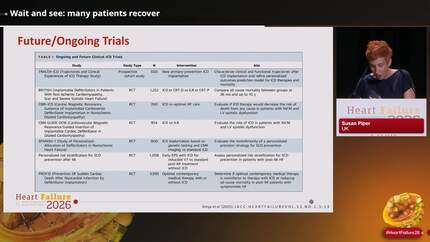
Implantable cardioverter-defibrillators (ICD) are gold-standard therapy for primary prevention (PP) of sudden cardiac death (SCD) in patients with heart failure with reduced ejection fraction (HFrEF). According to relevant guidelines, ICDs should be implanted only after patients have been treated with revascularization procedures and/or optimal medical therapy (OMT) [1]. Due to perceived high risk of SCD and low chance of improvement some patients receive ICDs “too early” in the course of the disease [2].
To investigate adherence to guidelines in our institution with emphasis on premature ICD implantation and early ICD activation.
We analysed all ICDs newly implanted for PP in patients with HFrEF in our institution between 2011 and 2017. Follow-up data was collected from hospital medical records.
Total number of 307 ICDs were implanted during the analysed interval, 147 (47.9%) in ischemic cardiomyopathy (ICM) and 160 (52.1%) in non-ischemic dilated cardiomyopathy (DCM) patients. Only 57.8% of ICM patients have been treated with OMT at least 3 months before implantation. The proportion was similar in DCM patients (60.0%). However, DCM patients were more commonly implanted at the time of diagnosis (13.8% vs. 0.7% in ICM). It is worth noting that OMT was up-titrated after implantation in 35.2% of patients. In 9 cases patients were treated with ICDs less than 3 months after revascularization procedures or less than 6 weeks after STEMI (6 and 3 cases respectively). Follow-up data revealed that among all the patients who prematurely received an ICD, a device activated to deliver appropriate therapy within 3 months of implantation only in 1 ICM patient (0.7% of ICM patients). That patient had established ICM and was suffering from recurrent unexplained syncopes. One DCM patient with prematurely implanted ICD had early inappropriate ICD activation that was due to supraventricular tachycardia. Early ICD activations were generally uncommon even among patients who were treated according to guidelines (1 ICM and 1 DCM patient).
Results from our institutional ICD registry show that a significant number of patients with HFrEF received premature ICD implants before being treated with OMT. This is even more common in patients newly diagnosed with DCM. Our follow-up data suggests that early ICD activation is extremely rare in all comers and hardly ever happens in patients who received ICD immediately after diagnosis, revascularization or without 3 months of OMT. This data can help improve our future practice and encourage clinicians to follow relevant guidelines when faced with these important decisions.
Type of funding sources: None.
Contributors

I Prepolec
Author
V Pasara
Author
J E Bogdanic
Author
A Nekic
Author
J Putric Posavec
Author
B Pezo Nikolic
Author
R Matasic
Author
M Krpan
Author
M Lovric-Bencic
Author
L Percin
Author
M Puljevic
Author
D Puljevic
Author
D Milicic
Author
V Velagic
Author
You may be interested in