Arrhythmia detection using insertable cardiac monitors after a negative electrophysiology study in Brugada syndrome: observations from a multicenter Spanish registry
European Heart Journal


Abstract
Risk stratification in Brugada syndrome (BrS) remains controversial. In this respect, the role of electrophysiology study (EPS) has been subject of debate. It is common practice in some centers to implant an insertable cardiac monitor (ICM) after a negative EPS, especially in the presence of unexplained symptoms. However, the diagnostic value of this approach has never been specifically addressed.
We aimed to describe the baseline characteristics and the main findings of a diagnostic work-up strategy using an insertable cardiac monitor (ICM) after a negative EPS in patients with BrS.
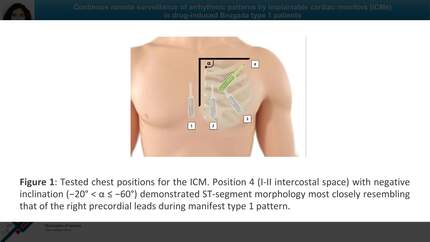
We retrospectively evaluated data from a multicenter registry including 56 BrS patients from 7 referral hospitals who received an ICM to help risk stratification. Only patients with a negative EPS (ie, non-inducible VT/VF) prior to ICM implantation were considered for this analysis. EPS protocols differed across hospitals (see Figure 1)
A total of 26 patients from 5 different hospitals were studied. Mean age was 33.0±12.8 and 77% were male. Spontaneous type 1 pattern was present in 12 patients (46%). Positive genotype was found in 10 (38%) and family history of sudden cardiac death was present in 11 (42%). Previous symptoms were syncope/presyncope in 15 patients (58%) and palpitations in 3 patients (12%). The rest of the patients (30%) were asymptomatic. After a median follow-up of 33.4 months (IQR 16.5 and 43.1 months), none of the patients presented ventricular arrhythmias. ICM allowed the detection of other arrhythmias in 5 patients (19%), which led to specific therapeutic actions in all but 2 of them (see Table 1). ICM-detected arrhythmias correlated with previously reported symptoms only in one of the patients.
The results of this exploratory analysis support the notion that EPS in BrS has a high negative predictive value for risk stratification. ICM implantation after a negative EPS may allow the detection of incidental arrhythmias during follow-up. Despite the apparent low correlation of these findings with previously reported symptoms, this strategy may lead to important treatment decisions in a significant proportion of patients.
Type of funding sources: None.
Figure 1
Table 1. Patients with ICM-detected arrhythmias
Contributors

E Garcia-Izquierdo Jaen
Author
J Palacios-Rubio
Author
T Ripoll-Vera
Author
I Hernandez-Betancor
Author
P Ramos-Ruiz
Author
E Diaz-Infante
Author
R Macias-Ruiz
Author
M Segura-Dominguez
Author
D Garcia-Rodriguez
Author
C Aguilera-Agudo
Author
D Jimenez-Sanchez
Author
Y De La Rosa
Author
V Castro-Urda
Author
J Toquero-Ramos
Author
I Fernandez-Lozano
Author
You may be interested in