Higher risk of adverse outcomes and need for pacemaker among patients undergoing radiofrequency ablation due to ectopic atrial tachycardia – a nationwide registry-based Danish study
European Heart Journal


Abstract
Atrioventricular nodal reentry tachycardia (AVNRT), Wolf-Parkinson-White syndrome (WPW), and Ectopic atrial tachycardia (EAT) are common arrhythmias and associated with lower quality of life. The use of radiofrequency ablation (RFA) treatment has increased over time, however long-term risk of adverse outcomes after RFA in patients with AVNRT, WPW, or EAT is unknown.
To examine the long-term risk of adverse outcomes and need for pacemaker after RFA in AVNRT-, WPW-, and EAT-patients.
Using Danish nationwide registries, patients of 18 years or older who underwent RFA for AVNRT, WPW, or EAT between January 1st 2001 and January 1st 2019 were included. Comorbidities and use of antiarrhythmic drugs were analyzed.
The cumulative incidences of pacemaker implantation and a combined endpoint of death, thromboembolism (TE), ischemic heart disease (IHD), and heart failure (HF) were estimated at 5-year follow-up using the Aalen-Johansen estimator, taking death as competing risk into account.
A total of 10.439 patients were enrolled in the study. 6187 patients were treated for AVNRT. The median age was 55 [42, 65] and 40% were male. The WPW group consisted of 2872 patients. The median age was 42 [29, 55] and 61% were male. The EAT group consisted of 1380 patients. The median age was 57 [44, 67] and 47% were male.
The comorbidity burden was generelly higher in EAT patients especially regarding heart failure and hypertension. Use of antiarrhythmic drugs was higher in EAT patients compared to patients with AVNRT and WPW.
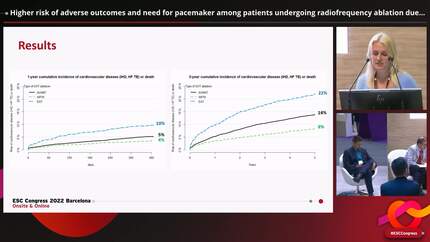
Figure 1 shows the cumulative incidence of a composite endpoint of death, TE, IHD, and HF 5 years after RFA treatment and depicts that the cumulative incidence was 22.1%, 13.9% and 8.2% for EAT-, AVNRT- and WPW-patients respectively. Figure 2 shows the 5-year cumulative incidence of pacemaker implantations which was 9.0%, 4.4% and 3.1% for EAT-, AVNRT- and WPW-patients respectively.
At long-term follow-up patients with RFA for EAT have a higher risk of death, TE, IHD and HF compared to patients treated for AVNRT and WPW. EAT patients also have the highest risk of pacemaker implantation.
Type of funding sources: None.
Figure 1
Figure 2
Contributors

C Middelfart
Author
J T Toennesen
Author
C Z Zoerner
Author
G G Gislason
Author
J P Pallisgaard
Author
M R Ruwald
Author
M L H Hansen
Author
You may be interested in