Characteristics of incident atrial fibrillation patients – a nationwide register-based study with information from primary-, secondary- and tertiary care
European Heart Journal


Abstract
Atrial fibrillation (AF) is the most common sustained cardiac arrhythmia, with a current prevalence of 4.1% in Finland. Many of the comorbidities associated with AF are known risk factors for the arrhythmia and vice versa, as well as contributors to the risk of stroke and other AF related adverse events. A generally used evaluation method for the risk of stroke is the clinical risk factor -based CHA2DS2-VASc score, but other thromboembolic risk factors also exist.
To better understand current AF population, this study describes characteristics, comorbidities, medication, and laboratory values of Finnish AF patients at the time of first AF diagnosis.
The Finnish AntiCoagulation in Atrial Fibrillation (FinACAF) study is a nationwide register-based cohort study in which AF patient data has been linked from several Finnish health care- and national registers, with information from primary-, secondary-, and tertiary care. This substudy consists of patients over 20 years old with available laboratory data and an incident AF diagnosis (ICD-10 I48) between 1/1/2010–31/12/2018 in any of the used registers.
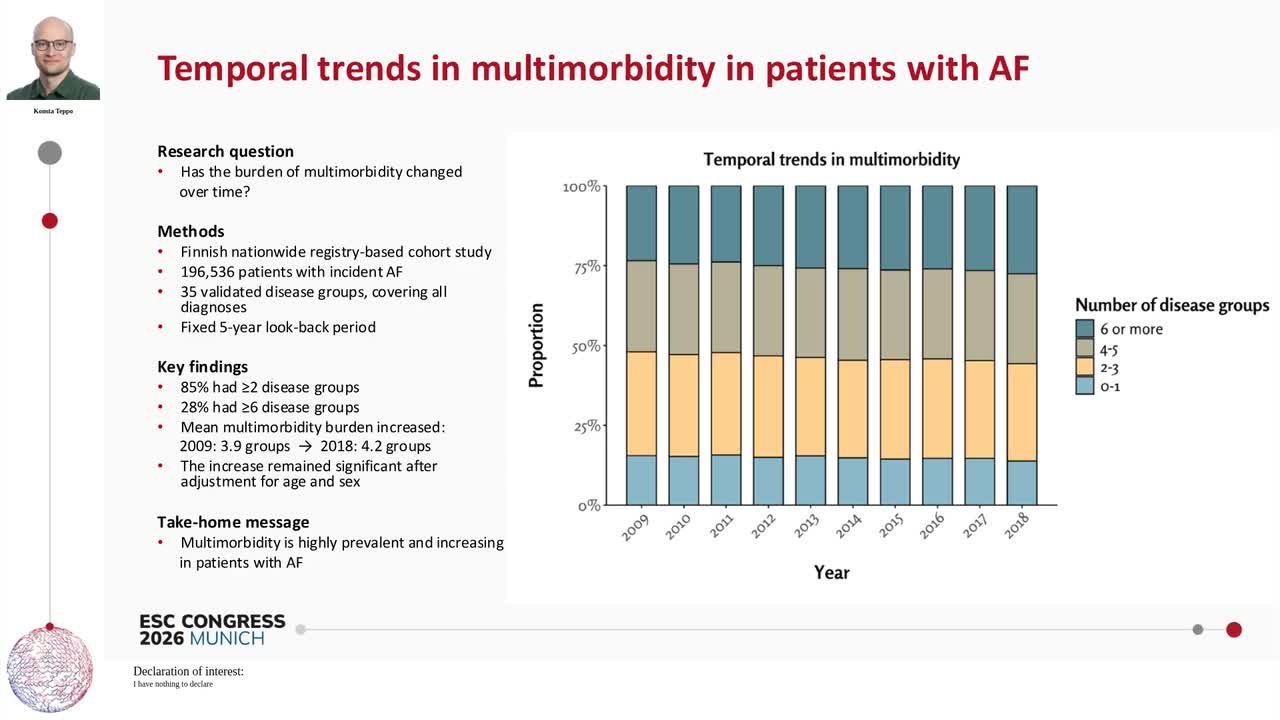
Within the study period 143,455 patients with a new AF were registered. The mean age at time of diagnosis was 69.1 years for men and 76.3 years for women. The mean CHA2DS2-VASc score when entering the cohort was 3.48 (SD 1.88), and 84.9% of the cohort had at least one of the comorbidities included in the CHA2DS2-VASc score. The most prevalent comorbidities and medications of the cohort are shown in the figure, and a more comprehensive look is presented in the table. The medications listed have been in use during the year before cohort entry.
Atrial fibrillation does not come alone. Almost all patients diagnosed with AF have previous comorbidities and medications. Future analysis will provide information on how these evolve after AF diagnosis and elucidate their association with different endpoints.
Type of funding sources: Public hospital(s). Main funding source(s): Helsinki and Uusimaa Hospital District
Contributors

E Kouki
Author
B Salmela
Author
J Haukka
Author
O Halminen
Author
E Karlsson
Author
P Mustonen
Author
J Putaala
Author
M Linna
Author
A Aro
Author
J Hartikainen
Author
K E J Airaksinen
Author
M Lehto
Author
You may be interested in