Clinical outcome and mortality in patients with ICD for primary prevention
European Heart Journal


Abstract
ICD (Implantable Cardiac Defibrilator) for primary prevention is indicated in patients with EF ≤35% and NYHA class II–III heart failure despite at least 3 months of optimal medical therapy.However, the studies that form the basis of this recommendation belong to more than 20 years ago. These studies may not reflect the characteristics and treatment of current heart failure patients. Therefore, the effect of ICD for primary prevention on prognosis may have been changed. Recent studies have called into question the effectiveness of the ICD in primary prevention.
The aim of our study is to evaluate the patients who had ICD for primary prevention implanted retrospectively.
The primary outcomes of all-cause death and sudden death were compared in patients who underwent ICD for primary prevention at our clinic between 01.01.2015 and 01.03.2020 and patients with ICD indication but who did not accept this treatment.
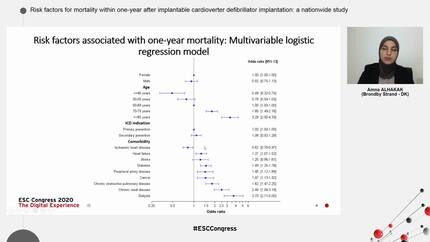
Of the 228 patients who had ICD for primary prevention implanted, 175 (76.8%) were male.The mean age of the patients was 65.63±11.94 years. The mean follow-up period of the patients was 39.45±18.89 months. The mean left ventricular ejection fraction of the patients was found to be 24.30±6.19%. Procedural complications developed in 36 (15.8%) of 228 patients. When these complications were analyzed according to the gender of the patients, complications developed in 21 (12%) of 175 male patients and 15 (28.3%) of 53 female patients (p: 0.004). When the ICD implanted group and the control group were compared in terms of all cause mortality, 67 (29.4%) of 228 patients in the ICD arm and 39 (26%) of 150 patients in the control group died due to all causes mortality (p: 0.473) (Figure 1). When the ICD implanted group and the control group were compared in terms of sudden death, 2 patients in the ICD arm and 8 patients in the control group had sudden death (p: 0.017). Age, left ventricular ejection fraction, BNP value, and previous hospitalization due to decompensation heart failure were found to be independent predictors of all-cause mortality by multiple logistic regression method. Mortality was 3.4 times higher in patients who were hospitalized with decompensated heart failure before the procedure. In the ICD implanted group, the all-cause mortality of patients with a BNP value above 508.5, LVEF value below 24.5%, and age greater than 68.5 was 25 times higher than in other patients (Wald: 9.938 OR (95% Cl): 0.039 (0.005–0.293) p: 0.002) (Table 1). It was found that the presence of coronary artery disease was not an independent risk factor.
Our patient population and our findings are compatible with current life data. We think that the recommendations for ICD for primary prevention implantation in the guidelines may be downgraded in the future with current treatment options. It will be important to determine which patient population will most benefit from the ICD treatment for primary prevention.
Type of funding sources: None.
Figure 1
Table 1
Contributors

You may be interested in