Edoxaban in dialysis: a 4-year follow-up in a single center experience
European Heart Journal


Abstract
Patients with atrial fibrillation (AF) and advanced chronic kidney disease (CKD) are at high risk of adverse events and are complicated to manage. There is little evidence on the effects of non-vitamin K oral anticoagulants in patients with severe CKD. Preliminary data in patients taking edoxaban whose creatinine clearance fell below 30 mL/min showed a low risk of stroke and major bleeding. The aim of our study is to test the safety of edoxaban 30 mg/day in patients with severe renal impairment with an estimated glomerular filtration rate (eGFR) <15 mL/min in dialisys.
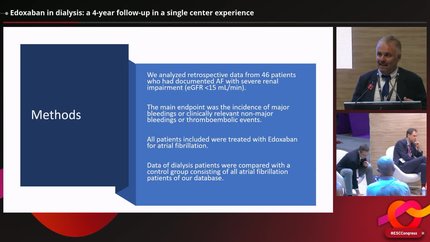
We analyzed retrospective data from 46 patients who had documented AF with severe renal impairment (eGFR <15 mL/min). The follow-up, characterized by clinical examination and blood analysis, was performed every 6 months. The main endpoint was the incidence of major bleedings or clinically relevant non-major (CRNM) bleedings or thromboembolic events.
All patients included were treated with Edoxaban for atrial fibrillation.
At the time of the data collection, the mean follow-up in valvular patients was 24±2 months. There were no major bleedings, strokes, transitory ischemic event, systemic embolisms, or cardiovascular deaths were been reported. 3 (12.5%) cases of minor bleeding was reported. The complication rate of the patients in dialysis are the same than the atrial fibrillation population without any statistical differences (1.39% vs 1,37%, p: 0.96).
The use of Edoxaban in dialysis and atrial fibrillation seems safe and effective.
Type of funding sources: None.

You may be interested in