Evaluation of a multisensory algorithm to prevent acute decompensation of heart failure in patients implanted with a cardioverter defibrillator: rationale and design
European Heart Journal


Abstract
Heart failure (HF) is a chronic disease affecting 64 million people worldwide and places a severe burden on society because of its mortality, numerous re-hospitalizations and associated costs [1–4]. HeartLogic is an algorithm incorporating several biometric parameters which aims to predict HF episodes. It provides an index which can be monitored remotely, allowing preemptive treatment of congestion to prevent acute decompensation [5–7].
We aim to provide real-world data on the impact of pre-emptive HF management, guided by the HeartLogic index on unscheduled HF hospitalizations in a substantial cohort of patients.
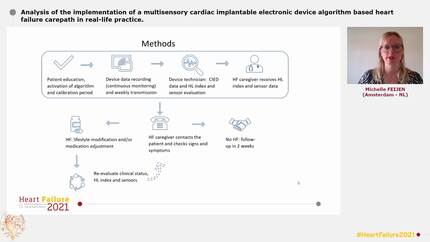
The HeartLogic French Study is an investigator-initiated, prospective, multi-centre, non-randomized study. All in all, 310 patients with a history of HF (left ventricular ejection fraction ≤40%; or at least one episode of clinical HF with elevated NT-proBNP ≥450 ng/L) and implanted with a cardioverter defibrillator enabling HeartLogic index calculation will be included across 10 French centers. The HeartLogic index will be monitored remotely on a weekly basis for 12 months and in case of HeartLogic index ≥16, the local investigator will contact the patient for assessment and adjust HF treatment as necessary. The primary endpoint is unscheduled hospitalization for HF. Secondary endpoints are all-cause mortality, cardiovascular death, HF-related death, and unscheduled hospitalizations for ventricular or atrial arrhythmia. Blood samples will be collected for biobanking, and quality of life will be assessed. A blind and independent committee will adjudicate the events.
The HeartLogic French Cohort Study will provide robust real-world data on HF hospitalization in a cohort of patients managed with the HeartLogic algorithm allowing preemptive treatment of congestion.
Type of funding sources: Private grant(s) and/or Sponsorship. Main funding source(s): Boston Scientific
Design of the study
Pre-emptive treatment of congestion
Contributors

R Garcia
Author
J Mansourati
Author
D Gras
Author
V Probst
Author
P Khattar
Author
C Himbert
Author
P J Saulnier
Author
V Constantin-Jacquot
Author
J P Gueffet
Author
D Minois
Author
B Pierre
Author
P Defaye
Author
E Marijon
Author
S Boveda
Author
B Degand
Author
You may be interested in