Prevalence of unreported atrial fibrillation in electrocardiograms with ventricular-paced rhythm: a multicenter experience
European Heart Journal


Abstract
Atrial fibrillation (AF) is the most common sustained cardiac arrhythmia and a major preventable cause of stroke. The diagnosis of AF on electrocardiogram is through the recognition of absent p waves and an irregularly irregular ventricular rhythm. However, in ventricular-paced patients, the rhythm on electrocardiogram (ECG) is often regular and may obscure AF diagnosis. Thus, unrecognized AF on ECG poses a potential risk among untreated ventricular-paced patients. There is scant published data reporting the prevalence of underrecognized and untreated ECG-detected AF among ventricular-paced patients.
In the first part of this study, we aim (1) to determine the prevalence of AF and unreported AF on ECGs with ventricular-paced rhythm obtained across all 6 hospitals in our city, Canada. Using data obtained from (1), we then aim (2) to report the rates of untreated and unreported ECG-detected AF among ventricular-paced patients with an indication for anticoagulation, (3) to describe the length of delay in AF recognition and treatment among patients who should be considered for anticoagulation at the time of ECG-detected AF and (4) to identify possible strategies that can improve reporting of AF on ECGs with ventricular-paced rhythm using our institutional ECG software.
This is a retrospective multicenter review of ventricular-paced ECGs interpreted and reported by physicians using our institutional ECG software. ECGs were reviewed and confirmed by two independent cardiologists who were blinded from the reported interpretation of the ECGs.
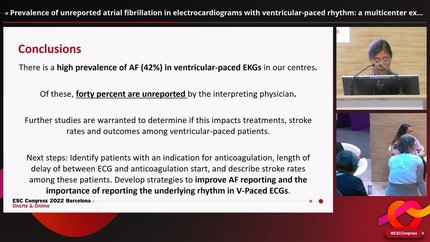
Of the sample of 1500 ECGs with ventricular-paced rhythm from 2017–2019, 2 independent cardiologists agreed that AF was present in 622 ECGs (41.5%). Of these, 251 (40.4%) were not reported to have AF by the interpreting physician.
Our study shows that there is a high prevalence of unreported AF on ECG in patients with ventricular-paced rhythm in our local hospitals. Further studies are warranted on describing whether this impacts treatment and outcomes among ventricular-paced patients. This study also highlights the importance of identifying possible strategies to improve reporting of AF on ECGs with ventricular-paced rhythm.
Type of funding sources: None.
Contributors

You may be interested in