Impact of atrial fibrillation on outcome of percutaneous mitral valve repair (PMVR) procedure
European Heart Journal


Abstract
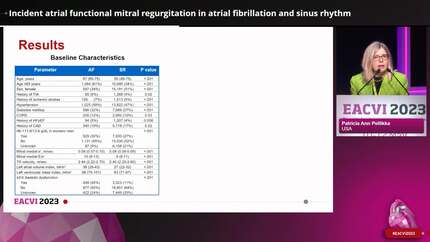
Limited evidence exists regarding the impact of atrial fibrillation (AF) on outcomes after percutaneous mitral valve repair (PMVR). The aim of the present study was to compare 1-year clinical outcomes following PMVR in patients with and without AF.
426 patients with PMVR for severe MR were included in the COburg MItraclip (COMI) registry between 2016 and 2021. Patients were divided into an AF group (group A, n=284) and a non-AF group (group B, n=142). Clinical profiles, PMVR procedure characteristics and the clinical follow-up were compared between the two groups.
Patients with AF were older (79.3±6.3 [AF] vs. 77.8±8 years [non-AF], p=0.03), had higher N-terminal B-type natriuretic peptide levels (NT-pro BNP: 5675±5544.2 vs 8516±11184.5, p=0.004), more often a coronary artery disease (62% vs 38%, p=0.03) and had a lower stroke risk (CHA2DS2-VASc score: 4.6±1.2 vs 4.9±1.3, p=0.01). There were no significant differences between groups with regard to the gender, logistic Euroscore or prevalence of chronic heart failure, hypertension, diabetes mellitus or severe mitral regurgitation. Acute procedural success (post-procedural 2. MR, 95.1% vs. 94.4%; p=0.76) and procedure-related major complications were similar.
There were no significant differences in 1-year MACCE (death, MI, stroke, bleeding), health-related quality of life or clinical improvement.
In patients with mitral regurgitation who underwent PMVR, AF is common and appears not to have a relevant negative impact on the clinical outcome at 1 year compared to patients with sinus rhythm.
Type of funding sources: None.
Contributors

Y Mohrez
Author
J Strohmaier
Author
T C Paiva
Author
M Forkmann
Author
S Butz
Author
T Acil
Author
S Schnupp
Author
C Mahnkopf
Author
S Busch
Author
You may be interested in