Effects of medical therapy, transcatheter intervention, and surgery on outcomes of patients with functional mitral regurgitation: a systematic review and network meta-analysis
European Heart Journal


Abstract
Type of funding sources: Public Institution(s). Main funding source(s): Ching-Hui Sia was supported by the National University of Singapore Yong Loo Lin School of Medicine's Junior Academic Fellowship Scheme.
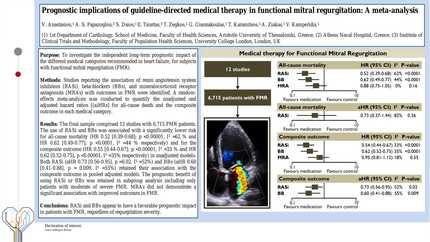
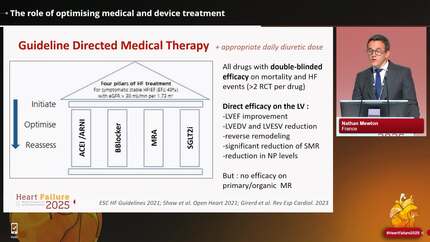
Functional mitral regurgitation (FMR) is the most common valvular heart disease worldwide. Despite recent major trials, the relative efficacy between medical therapy, transcatheter intervention, and surgery for the treatment of FMR remains poorly understood.
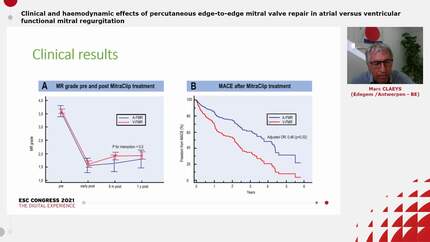
We performed a systematic review and network meta-analysis of all published randomised controlled trials (RCTs) and observational studies to compare the efficacy between medical therapy, transcatheter intervention, and surgery on the clinical outcomes of patients with FMR.
Four electronic databases (PubMed, EMBASE, SCOPUS, and the Cochrane Library) were searched from inception to March 13, 2022, for studies reporting clinical outcomes in patients with FMR and comparing the efficacy between either medical therapy, transcatheter intervention, or surgery. Frequentist network meta-analysis models were utilised to summarise the studies. This study was registered in the International Prospective Register of Systematic Reviews.
10 articles were included in the analysis, comprising a combined cohort of 1,981 patients. Network meta-analysis demonstrated that compared to medical therapy, transcatheter intervention achieved a lower relative risk in the composites of all-cause mortality (risk ratio [RR]: 0.43; 95% confidence interval [CI] 0.22-0.82) and mitral regurgitation (MR) severity grade ≥3+ (RR: 0.06; 95% CI 0.01-0.42). Compared to surgery, transcatheter intervention achieved a lower relative risk in the composites of cardiovascular death (RR: 0.36; 95% CI 0.17-0.75) and MR severity grade ≥3+ (RR: 0.25; 95% CI 0.09-0.70) and higher relative risk in the composite of heart failure hospitalisation (RR: 2.94; 95% CI 1.26-6.82). Compared to medical therapy, surgery achieved a higher relative risk in the composite of cardiovascular death (RR: 2.54; 95% CI 1.18-5.47) and lower relative risks in the composites of all-cause mortality (RR: 0.56; 95% CI 0.34-0.91) and heart failure hospitalisation (RR: 0.28; 95% CI 0.13-0.61).
Medical therapy, transcatheter intervention, and surgery in patients with FMR displayed differing effects on the various clinical outcomes. Further head-to-head trials are required to better understand the optimal treatment modality in this population.
Contributors

E W X Tan
Author

P Chai
Author
R C C Wong
Author
J W L Yip
Author
I Kuntjoro
Author
Y H Lim
Author
K K Poh
Author
T C Yeo
Author
W K F Kong
Author

You may be interested in