Impact of cholesterol on proinflammatory monocyte production by the bone marrow
European Heart Journal


Abstract
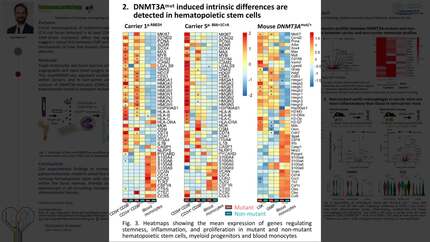
Preclinical work indicates that low-density lipoprotein cholesterol (LDL-C) not only drives atherosclerosis by directing the innate immune response at plaque level but also augments proinflammatory monocyte production in the bone marrow (BM) compartment. In this study, we aim to unravel the impact of LDL-C on monocyte production in the BM compartment in human subjects.
A multivariable linear regression analysis in 12 304 individuals of the EPIC-Norfolk prospective population study showed that LDL-C is associated with monocyte percentage (β = 0.131 [95% CI: 0.036–0.225];
Collectively, these data highlight that LDL-C impacts haematopoiesis, promoting both the number and the proinflammatory activation of circulating monocytes. Furthermore, this study reveals a potential contributory role of HSPC transcriptomic reprogramming to residual inflammatory risk in FH patients despite cholesterol-lowering therapy.
Contributors

Lotte C A Stiekema
Author
Lisa Willemsen
Author
Yannick Kaiser
Author
Koen H M Prange
Author
Nicholas J Wareham
Author
S Matthijs Boekholdt
Author
Carlijn Kuijk
Author
Menno P J de Winther
Author
Carlijn Voermans
Author
Matthias Nahrendorf
Author

You may be interested in