Effects of canagliflozin on human myocardial redox signalling: clinical implications
European Heart Journal


Abstract
Recent clinical trials indicate that sodium-glucose cotransporter 2 (SGLT2) inhibitors improve cardiovascular outcomes in heart failure patients, but the underlying mechanisms remain unknown. We explored the direct effects of canagliflozin, an SGLT2 inhibitor with mild SGLT1 inhibitory effects, on myocardial redox signalling in humans.
Study 1 included 364 patients undergoing cardiac surgery. Right atrial appendage biopsies were harvested to quantify superoxide (
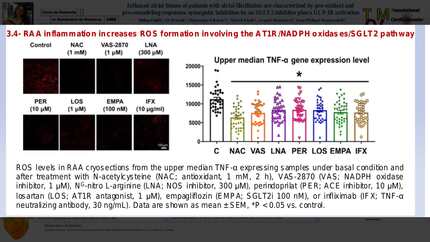
We demonstrate for the first time that canagliflozin suppresses myocardial NADPH oxidase activity and improves NOS coupling via SGLT1/AMPK/Rac1 signalling, leading to global anti-inflammatory and anti-apoptotic effects in the human myocardium. These findings reveal a novel mechanism contributing to the beneficial cardiac effects of canagliflozin.
Contributors

Hidekazu Kondo
Author
Ioannis Akoumianakis
Author
Ileana Badi
Author
Nadia Akawi
Author
Christos P Kotanidis
Author

Murray Polkinghorne
Author
University of Oxford Oxford , United Kingdom of Great Britain & Northern Ireland
Ilaria Stadiotti
Author

Alexios S Antonopoulos
Author
Maria C Carena
Author

Elsa Mauricio Reus
Author
Rana Sayeed
Author
Oxford University Hospitals NHS Trust Oxford , United Kingdom of Great Britain & Northern Ireland
George Krasopoulos
Author
Vivek Srivastava
Author
Shakil Farid
Author
Surawee Chuaiphichai
Author
Cheerag Shirodaria
Author
Keith M Channon
Author

Barbara Casadei
Author
National Heart and Lung Institute Imperial College London , United Kingdom of Great Britain & Northern Ireland

Charalambos Antoniades
Author
University of Oxford Oxford , United Kingdom of Great Britain & Northern Ireland
You may be interested in