Presence and stability of rotors in atrial fibrillation: evidence and therapeutic implications
Cardiovascular Research


Abstract
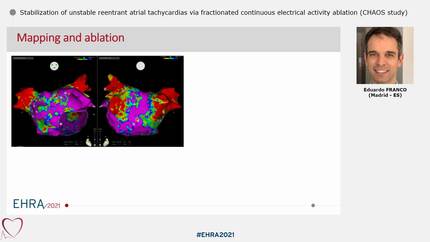
Rotor-guided ablation has opened new perspectives into the therapy of atrial fibrillation (AF). Analysis of the spatio-temporal cardiac excitation patterns in the frequency and phase domains has demonstrated the importance of rotors in research models of AF, however, the dynamics and role of rotors in human AF are still controversial. In this review, the current knowledge gained through research models and patient data that support the notion that rotors are key players in AF maintenance is summarized. We report and discuss discrepancies regarding rotor prevalence and stability in various studies, which can be attributed in part to methodological differences among mapping systems. Future research for validation and improvement of current clinical electrophysiology mapping technologies will be crucial for developing mechanistic-based selection and application of the best therapeutic strategy for individual AF patient, being it, pharmaceutical, ablative, or other approach.
Contributors

María S. Guillem
Author
Andreu M. Climent
Author
Miguel Rodrigo
Author
Francisco Fernández-Avilés
Author
Felipe Atienza
Author
You may be interested in