Pharmacological evaluation of the use of dexrazoxane in preventing anthracycline induced cardiotoxicity in breast cancer
European Heart Journal


Abstract
Type of funding sources: None.
Anthracyclines and trastuzumab are extensively used for the treatment of breast cancer but are associated with an increased risk of dilated cardiomyopathy. Dexrazoxane is an iron-chelating agent used to reduce the risk of cardiotoxicity, but it is seldom used in clinical practice.
A meta-analysis was performed to check the efficacy of dexrazoxane in patients with breast cancer who were treated with anthracyclines with or without trastuzumab.
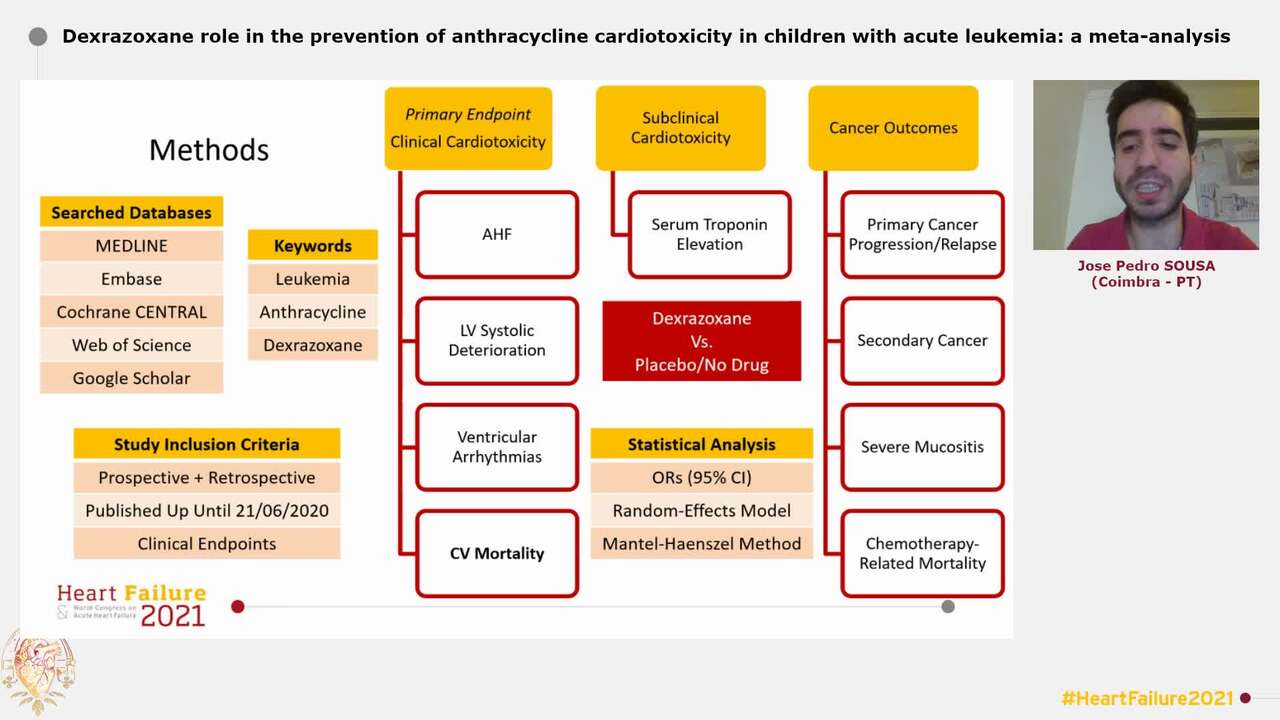
Online databases were searched from January 2000 up to October 31, 2019, for clinical trials on the use of dexrazoxane for the prevention of cardiomyopathy in patients with breast cancer receiving anthracyclines with or without trastuzumab. Risk ratios with 95% confidence intervals were calculated using a mixed-effects model meta-analysis.
Five randomized trials and 2 retrospective trials with a total of 1,587 patients were included. Dexrazoxane reduced the risk of clinical heart failure (p < 0.001) and cardiomyopathy (p < 0.001) irrespective of previous exposure to anthracyclines. The overall survival rate, progression-free survival and the rate of partial or complete oncological response were not affected by dexrazoxane.
Our study concludes that dexrazoxane reduced the risk of heart failure and cardiomyopathy in the patients who were treated with anthracycline chemotherapy with or without trastuzumab and did not impact cancer outcomes significantly. However, the area of our study is limited and further studies should be done before the systematic application of this therapy in clinical practice. Abstract Figure.
Contributors

You may be interested in